

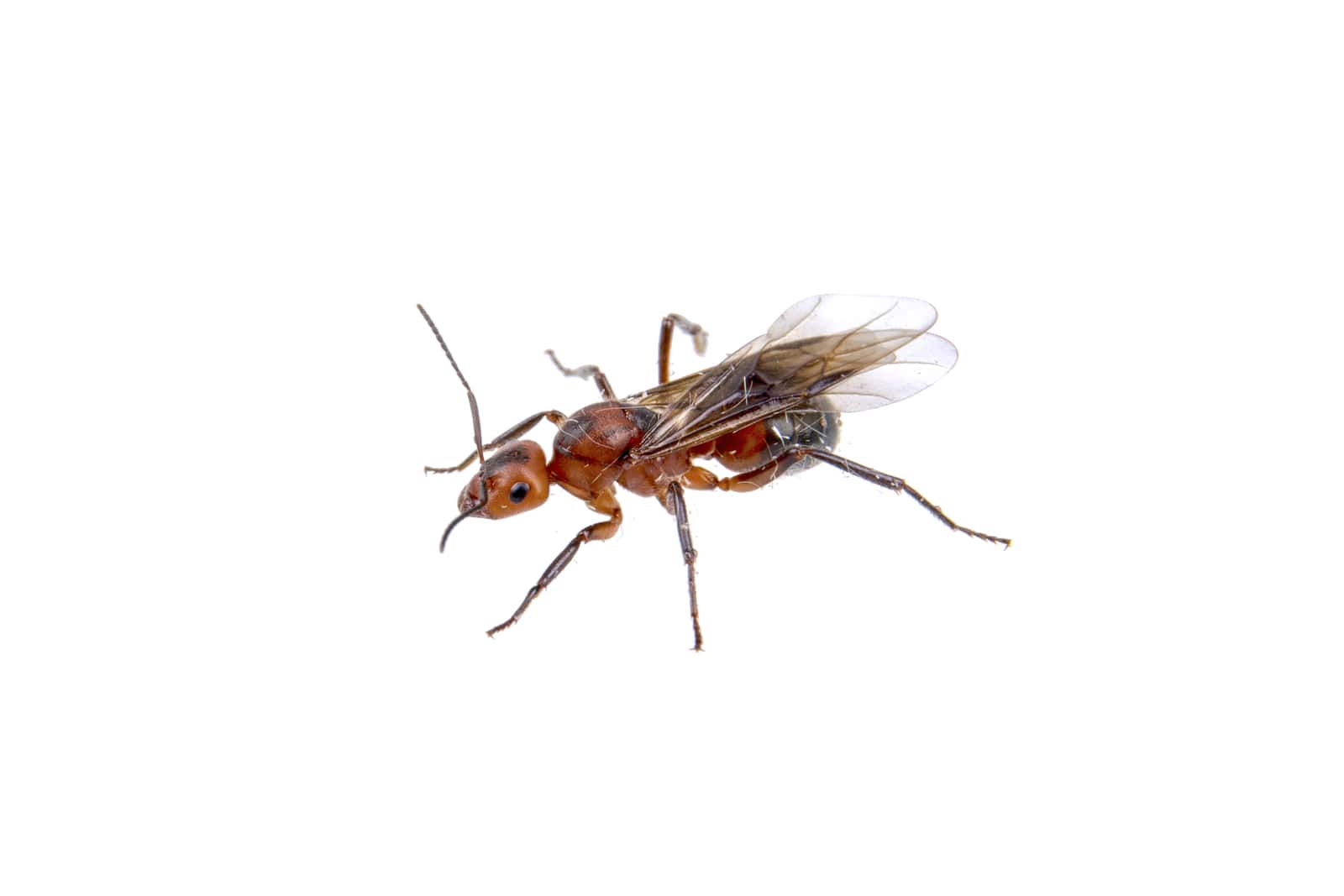
Carpenter Ants
Live Carpenter Ant-Free with Pointe!
Pointe Pest Control is committed to keeping your home pest-free in every season. Our team of experienced and state-certified technicians are dedicated to providing safe and effective pest control services for the Western Illinois and Eastern Missouri areas. If a pest problem is not completely resolved after a visit, our technicians will return until it is eliminated.
Free Pest Control Quote
The Case of Carpenter Ants
Knock On Wood
A Carpenter Ant’s Cravings
Eliminate Carpenter Ants Today!

Inspect and Test

Prevent Carpenter Ants

Ant-Free Guarantee
“Are Termites The Same As Carpenter Ants?”
- 3/8 to 1/2 of an inch long
- Different colors (black, brown,
red) - Narrow waist
- Bent antennae
- Eat protein and sweets
- Colony has 10,000 to
20,000 ants - Venture outside to forage
for food
- 1/8 to 1/2 of an inch long
- Light brown coloring
- Broad waist
- Straight antennae
- Eat wood and cellulose-based materials
- Colony has 50,000 to 1 million termites
- Stay within wood and avoid the light
Prevent, Detect, Protect
Pointe Pest Controls Carpenter Ants
I Highly Recommend
Had carpenter ants all over my master bath. I tried my best to get rid of them myself, but it wasn’t working. Pointe was able to find the source and now they’re gone. It took about 2 months, but from what I understand, this is normal. Haven’t seen an ant in my house for about 15 months now. I highly recommend Pointe. Cheaper than the bigger names and just as effective.
Frequently Asked Questions About Carpenter Ants
What makes carpenter ants different from other ants?
Carpenter ants are larger than most common ant species and are known for nesting inside wood rather than soil. They do not eat wood, but they excavate it to create galleries for their colonies, which can lead to structural damage over time.
These ants typically prefer wood that is already weakened by moisture, decay, or rot. Because of this, infestations are often linked to leaks, water damage, or damp areas within a structure.
Since carpenter ants usually leave the nest to forage, they may only be seen occasionally. This can make it difficult to determine how extensive an infestation is without a proper inspection.
How do carpenter ants damage homes?
Carpenter ants tunnel through wood to expand their nesting galleries. Over time, this activity can weaken beams, walls, and other wooden structures, especially if the wood is already compromised.
They are most commonly found in damp or decaying wood, but homes provide shelter, insulation, and access to food sources that make them attractive nesting sites.
Because colonies can grow large and remain active for many years, untreated infestations may continue causing damage if not properly addressed.
How does carpenter ant treatment work?
Treatment begins with a detailed inspection to locate nesting areas, foraging trails, and moisture-related issues that may be contributing to the infestation. Identifying these factors is essential for effective control.
Non-repellent treatments and targeted baits are used so ants unknowingly carry the product back to the nest. This allows the treatment to reach the entire colony rather than just visible ants.
Because carpenter ant bait takes time to circulate through the colony, activity may increase at first before gradually declining as the treatment takes effect.
Is it normal to still see ants after treatment?
Yes, seeing continued activity shortly after treatment is expected. As ants locate the bait, they become more active while transporting it back to the colony.
This increase does not mean the treatment is failing. Instead, it indicates that the ants are interacting with the treatment as intended.
Over time, activity will decrease as the colony is impacted. Follow-up visits help confirm that the infestation has been fully resolved.
Are carpenter ant treatments safe?
Treatments are applied in targeted areas such as entry points, foraging trails, and hidden spaces where ants travel. This focused approach helps minimize unnecessary exposure.
Products are used according to label directions and applied with care to ensure safety while remaining effective against carpenter ants.
Normal household routines can typically continue after treatment, following any guidance provided by the technician.
How long does carpenter ant control take?
Carpenter ant control is not immediate and often requires multiple visits. Bait-based treatments work gradually as ants spread the product throughout the colony.
The size and location of the nest, as well as moisture conditions, can affect how long the process takes. Some infestations resolve faster than others.
Ongoing monitoring and follow-up services help ensure that all colony activity has stopped before treatment is considered complete.
What causes carpenter ants to return?
Recurring infestations are often linked to unresolved moisture problems, damaged wood, or unsealed entry points. These conditions continue to attract carpenter ants even after treatment.
Leaks, condensation, and rotting wood provide ideal nesting environments that allow new colonies to establish.
Preventative measures such as repairing leaks and sealing gaps play a key role in long-term control.
How can carpenter ant infestations be prevented?
Reducing moisture is one of the most important prevention steps. Repairing leaks and addressing water-damaged wood helps remove nesting opportunities.
Sealing cracks, gaps, and entry points limits access into the structure. Regular inspections can also help catch early signs of activity.
When combined with professional monitoring, these steps help protect the home from future carpenter ant problems.
Where are carpenter ants most commonly found in a home?
Carpenter ants are most often found in areas where wood is damp or damaged. This includes window frames, door frames, crawl spaces, basements, and areas near plumbing.
They may also establish satellite nests in walls or ceilings while maintaining a primary nest elsewhere on the property.
Because nests are often hidden, professional inspection is necessary to locate all active areas.
Do carpenter ants only infest older homes?
No, carpenter ants can infest both older and newer homes. Any structure with moisture issues or wood damage can attract them.
Newer homes may still develop problems if there are leaks, condensation, or construction gaps that allow access.
Age alone does not determine risk—conditions inside and around the home do.
Can carpenter ants spread to other areas of the house?
Yes, carpenter ants can expand their galleries and create satellite nests as the colony grows. This allows them to spread through walls, ceilings, and structural wood.
Satellite nests help the colony access food and shelter more efficiently.
This is why early treatment is important to prevent further expansion.
Why is moisture such a big factor in carpenter ant infestations?
Moisture weakens wood, making it easier for carpenter ants to tunnel through. Damp environments also help support long-term nesting.
Leaks, poor ventilation, and water damage all contribute to conditions carpenter ants prefer.
Addressing moisture issues is an important part of preventing reinfestation.
Can carpenter ants be active year-round?
Carpenter ants are most active during warmer months when foraging and nest expansion occur. However, colonies inside structures can remain active even in cooler seasons.
Indoor warmth allows them to continue moving and feeding.
This means infestations should be addressed as soon as they are discovered, regardless of the time of year.
Why is professional treatment recommended for carpenter ants?
Carpenter ant nests are often hidden and difficult to locate without experience. Treating only visible ants does not eliminate the colony.
Professional treatment targets nesting sites, foraging trails, and entry points to ensure complete control.
This approach reduces the chance of ongoing damage and repeated infestations.
What happens if carpenter ants are left untreated?
If left untreated, carpenter ant colonies can continue expanding and damaging wood over time. Structural components may weaken as galleries grow.
Colonies can remain active for many years, increasing the scope of damage and the complexity of treatment.
Prompt service helps limit damage and restore long-term protection for the home.