

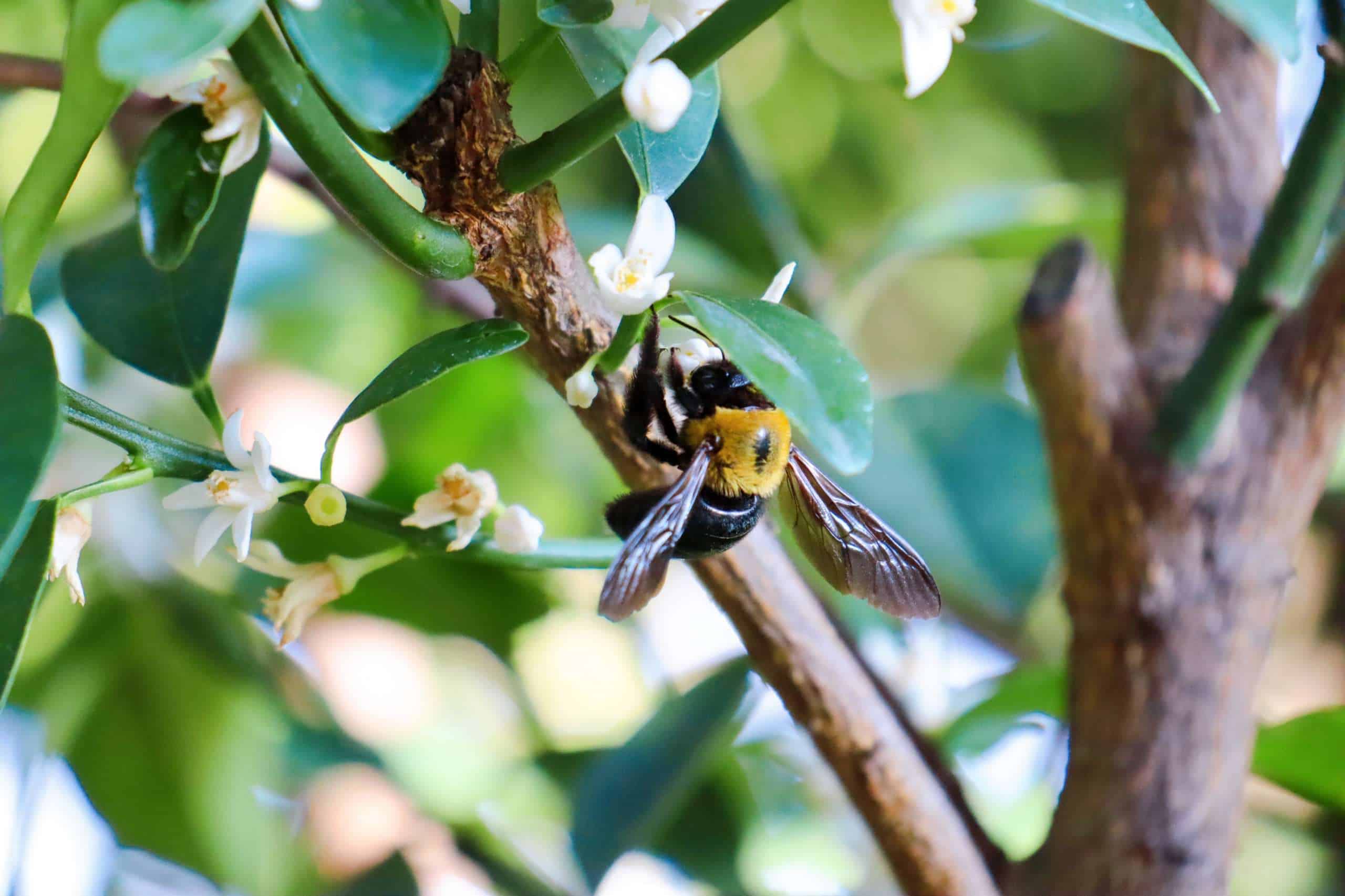
Carpenter Bees
Live Carpenter Bee-Free with Pointe!
Pointe Pest Control is committed to keeping your home pest-free in every season. Our team of experienced and state-certified technicians are dedicated to providing safe and effective pest control services for the Western Illinois and Eastern Missouri areas. If a pest problem is not completely resolved after a visit, our technicians will return until it is eliminated.
FREE PEST CONTROL QUOTE
Gentle Giants
A Wooden Retreat
What’s the Buzz?
Contact An Expert Today!

Initial Inspection

Thorough Treatments

Guaranteed Results
The Specialties of Carpenter Bees
Blocking Out the Bees
The Tailored Treatments of Pointe Pest Control
Very Professional
Had a great experience! We had a carpenter bee problem and it was taken care of along with spraying around the house. Very professional and thorough!
Free Pest Control Quote
Contact Us Form
Contact Pointe Pest Control Form
"*" indicates required fields
Frequently Asked Questions About Carpenter Bee
What are carpenter bees?
Carpenter bees rarely sting, and only female carpenter bees are capable of stinging at all. Even then, they typically only sting if handled or directly threatened.
Male carpenter bees do not have stingers and rely on aggressive buzzing to intimidate perceived threats.
While stings are uncommon, their nesting behavior poses a much greater concern for homeowners.
Do carpenter bees sting?
Carpenter bees rarely sting, and only female carpenter bees are capable of stinging at all. Even then, they typically only sting if handled or directly threatened.
Male carpenter bees do not have stingers and rely on aggressive buzzing to intimidate perceived threats.
While stings are uncommon, their nesting behavior poses a much greater concern for homeowners.
Why are carpenter bees considered a problem pest?
The main issue with carpenter bees is the damage they cause to wood. They chew perfectly round holes into unpainted wood to create nesting tunnels.
Although they do not eat the wood, repeated tunneling weakens structures over time. Each new generation expands existing tunnels, increasing damage year after year.
Decks, eaves, fences, railings, and window sills are common targets.
What types of wood do carpenter bees infest?
Carpenter bees only infest unpainted or untreated wood. They rely on exposed wood fibers to properly chew their entry holes and tunnels.
Painted wood is much less attractive to them and often prevents infestation altogether. Light stains may help but are less effective than paint.
Any exposed outdoor wood is at risk if left untreated.
How do carpenter bees build their nests?
Carpenter bees are solitary insects and do not live in hives or colonies. Each female creates her own nesting tunnel inside wood.
She chews an entry hole, then tunnels deeper and builds individual cells inside. Each cell contains bee bread, a mixture of pollen and nectar, along with a single egg.
The tunnels are reused and expanded each year by new generations.
When are carpenter bees most active?
Carpenter bees become active in mid-spring when females search for nesting sites. This is when most new holes are created.
The young bees emerge in late summer after developing inside the tunnels. Adult carpenter bees overwinter inside the same galleries.
Activity increases during warm months, making early detection important.
Do carpenter bees damage gardens or flowers?
Carpenter bees feed only on pollen and nectar and do not consume plants directly. They often visit flowers such as lavender, poppies, day lilies, and blueblossom.
However, they are known to steal nectar by cutting slits in certain flowers without pollinating them. This can reduce the health and appearance of ornamental plants.
While pollination is not their main issue, their behavior can negatively impact gardens.
How can homeowners tell the difference between carpenter bees and bumblebees?
Carpenter bees and bumblebees are often confused due to their size and buzzing behavior. However, carpenter bees have shiny abdomens with minimal fuzz, while bumblebees are rounder and fuzzier.
Bumblebees live in underground colonies with hundreds of bees, while carpenter bees live alone in wood tunnels.
Bumblebees are more defensive of their nests, whereas carpenter bees rely more on intimidation.
What are the signs of a carpenter bee infestation?
The most obvious sign is the presence of round holes in exposed wood. These holes are typically clean and perfectly circular.
Homeowners may also notice carpenter bees hovering near wood surfaces or hear buzzing around decks and eaves.
Wood shavings beneath holes can also indicate active tunneling.
How does Pointe Pest Control treat carpenter bees?
Carpenter bee treatment begins with a thorough inspection of the property. Technicians look for entry holes, wood damage, and live carpenter bees.
Dust treatments are applied directly into accessible gallery holes using a light, targeted approach. This ensures the bees are treated without causing them to abandon the tunnel prematurely.
Each tunnel is re-treated before sealing to ensure effectiveness.
Why is sealing carpenter bee tunnels important?
Sealing tunnels prevents carpenter bees from reusing the same galleries year after year. Untreated tunnels attract future generations.
By re-treating tunnels before sealing, Pointe Pest Control ensures bees inside are eliminated first.
This process helps protect the structural integrity of the wood.
What happens if carpenter bee holes are too high to reach?
If gallery holes are beyond safe reach, Pointe Pest Control may recommend having the wood professionally repaired or replaced.
Once repaired, the wood should be painted to prevent future infestations.
This combined approach helps eliminate current bees and reduce future risk.
How can homeowners prevent carpenter bees?
Painting exposed wood is the most effective prevention method. Carpenter bees are unlikely to chew through painted surfaces.
Regularly inspecting wood for new holes allows for early intervention. Sealing cracks and maintaining screens also helps keep bees out.
Preventative steps are especially important during spring nesting season.
Are carpenter bees aggressive toward people?
Carpenter bees may appear aggressive due to loud buzzing and hovering behavior, but they are generally not hostile.
Males may hover close to people to protect territory, but they cannot sting. Females typically avoid contact unless handled.
Their behavior is more intimidating than dangerous.
What happens if carpenter bees return after treatment?
If carpenter bees are not fully eliminated, Pointe Pest Control technicians will return to re-address the issue.
Treatments are designed to eliminate bees inside tunnels and prevent re-infestation.
This follow-up support ensures long-term protection.
Why choose Pointe Pest Control for carpenter bee control?
Pointe Pest Control uses carpenter bee-specific treatment techniques based on their nesting habits.
Rather than general bee control, treatments are targeted to galleries, damage areas, and prevention points.
With thorough inspections, careful applications, and guaranteed results, homeowners can feel confident their wood structures are protected.