

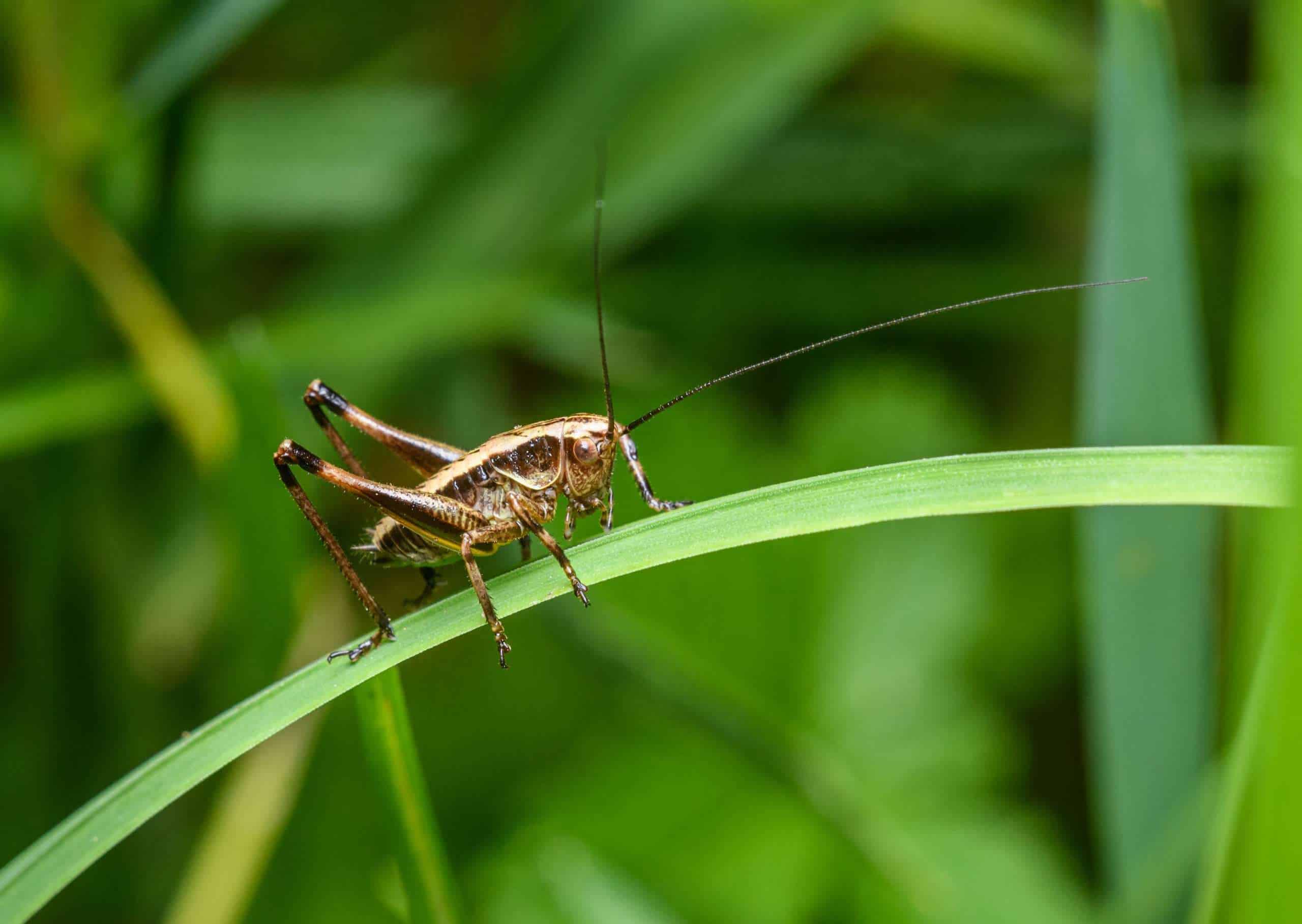
Crickets
Live Cricket-Free with Pointe!
Pointe Pest Control is committed to keeping your home pest-free in every season. Our team of experienced and state-certified technicians are dedicated to providing safe and effective pest control services for the Western Illinois and Eastern Missouri areas. If a pest problem is not completely resolved after a visit, our technicians will return until it is eliminated.
Free Pest Control Quote
The Noisiest Pests in Town
Hungry, Hungry Crickets
Chirp Thrills
Call Us for Cricket Prevention!

Thorough Inspection

Targeted Treatments

Cricket-Free Guarantee
The Crickets of the Greater St. Louis Area
Crickets Not Welcome
Pointe Knows Cricket Control
Very Pleased
Professional responsive service to reduce the crickets that have invaded my garage! Saw instant results, through coverage of the whole house including eaves and gables, and all entry points like hose bibs, electrical boxes, lights, etc. Very pleased with the personal service and friendly technician.
Frequently Asked Questions About Cricket
Why are crickets considered a problem pest indoors?
Crickets are often associated with outdoor summer sounds, but when they enter homes, they quickly become a nuisance. Their loud chirping, jumping ability, and destructive feeding habits make them unwelcome indoor pests.
Once inside, crickets seek warmth, shelter, and food sources. Homes provide all three, especially during colder months when outdoor conditions are less favorable.
Their ability to hide in walls, closets, and basements allows infestations to persist if not properly treated.
What do crickets look like?
Crickets vary in size from about sixteen millimeters to two inches long, depending on the species. They typically have long antennae, strong hind legs, and bodies that range from light brown to black.
Some cricket species have wings, while others rely solely on their jumping ability to move quickly. Their powerful legs allow them to leap up to thirty inches.
These physical traits make crickets difficult to catch and control without professional help.
Why do crickets chirp, especially at night?
Cricket chirping is primarily a form of communication and is most commonly a mating call. Male crickets rub their front wings together in a process called stridulation to produce sound.
Female crickets are attracted to louder and faster chirps, which typically signal a healthy mate. Males may also chirp after competing with other males.
Crickets chirp more frequently in warmer conditions, which is why the sound is often associated with summer nights.
Can cricket chirping indicate temperature?
There is a long-standing belief that cricket chirps can be used to estimate temperature, often referenced through Dolbear’s Law. This involves counting chirps over a set time and adding a number to estimate degrees Fahrenheit.
While this method can provide a rough estimate, it is not entirely accurate. Factors such as species, age, health, and diet affect chirping frequency.
For precise temperature readings, traditional thermometers are far more reliable.
What do crickets eat outdoors?
Crickets are omnivores but tend to prefer organic plant-based material. Outdoors, they commonly feed on grasses, vegetables, flowers, seeds, and grains.
Although they may consume aphids and pest larvae, crickets can still cause damage to gardens when populations grow.
Left unmanaged, they can contribute to noticeable plant damage over time.
What do crickets eat inside the home?
Once indoors, crickets look for organic food sources. Common targets include kitchen crumbs, paper products, and food-stained materials.
They are especially attracted to fabrics made of organic fibers such as cotton, wool, linen, and silk.
Small jagged holes in clothing or stored fabrics are often one of the first signs of a cricket problem.
How do crickets get inside homes?
Crickets typically enter homes through cracks, gaps, and openings around doors, windows, and foundations. They may also be drawn inside by lights or warmth.
Even small imperfections in the structure provide enough space for crickets to enter.
Once inside, they quickly seek sheltered areas where they can remain hidden.
What are the most common signs of a cricket infestation?
The most noticeable sign of a cricket infestation is chirping coming from inside the home rather than outdoors.
Other signs include small holes in clothing, paper, or fabrics, as well as the presence of live crickets indoors.
Finding multiple signs at once usually indicates an active infestation.
Do crickets reproduce indoors?
Crickets primarily reproduce outdoors, where females lay eggs in soil. Eggs can be laid shortly after reaching adulthood.
After hatching, nymphs resemble small wingless crickets and molt multiple times before becoming adults.
Although reproduction usually occurs outside, indoor infestations can persist as crickets continue entering from outdoors.
Can crickets bite people?
Crickets may bite if handled or threatened, but their mouthparts are not strong enough to puncture human skin.
Most species prefer to flee rather than fight when approached.
While bites are not a concern, their presence indoors is still disruptive.
What types of crickets commonly infest homes?
House crickets, field crickets, and camel crickets are the most common types associated with infestations.
House crickets are light brown and often remain indoors when temperatures drop. Field crickets are darker and usually enter structures due to lights or warmth.
Camel crickets prefer damp, dark areas and do not chirp due to their lack of wings.
Why are crickets attracted to homes in colder months?
As temperatures drop, crickets seek warm environments to survive. Homes provide consistent warmth, shelter, and food sources.
Interior lighting also attracts crickets, drawing them closer to entry points.
Without proper exclusion, homes become ideal winter shelters.
How does Pointe Pest Control treat cricket infestations?
Cricket control begins with a thorough inspection to identify live crickets, eggs, and entry points.
Treatments typically include exterior barrier applications, especially around doors, windows, and foundations.
Exclusion work is also used to block access and prevent future infestations.
What is exclusion work and why is it important for cricket control?
Exclusion work focuses on sealing cracks, gaps, and openings that crickets use to enter the home.
Smaller openings are sealed with caulk, while larger gaps may be filled with copper mesh before sealing.
This process helps eliminate access points and supports long-term prevention.
What can homeowners do to help prevent crickets?
Reducing moisture by fixing leaks and maintaining proper drainage helps make homes less attractive to crickets.
Keeping lawns trimmed, vegetation away from the house, and outdoor areas tidy reduces hiding spots.
Sealing entry points is one of the most effective preventative steps.
What happens if crickets return after treatment?
If crickets are not fully eliminated after a visit, Pointe Pest Control technicians will return to address the issue.
This follow-up ensures the infestation is properly resolved.
The goal is long-term cricket control, not just short-term relief.