

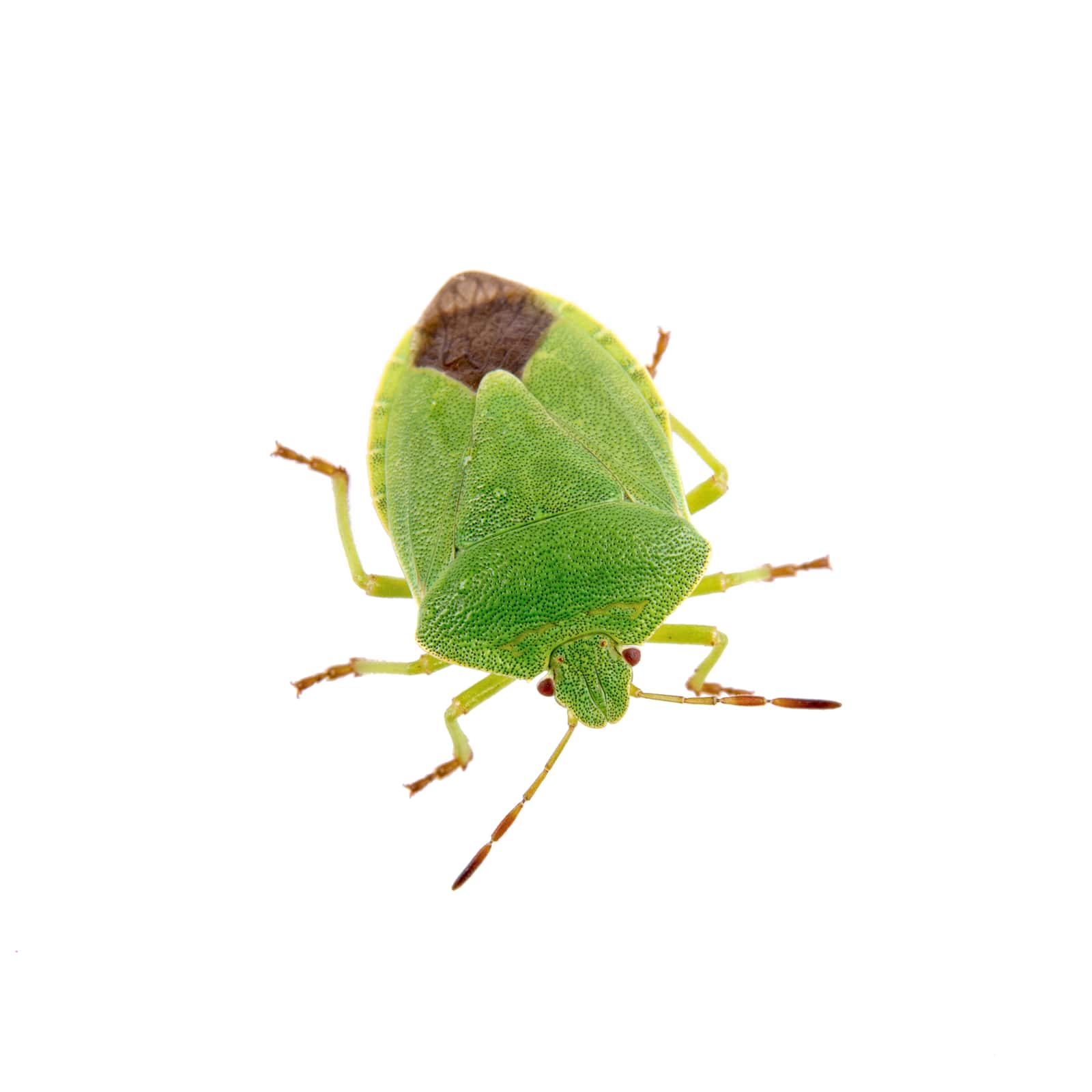
Stink bugs
Live Stink Bug-Free with Pointe!
Pointe Pest Control is committed to keeping your home pest-free in every season. Our team of experienced and state-certified technicians are dedicated to providing safe and effective pest control services for the Western Illinois and Eastern Missouri areas. If a pest problem is not completely resolved after a visit, our technicians will return until it is eliminated.
Free Pest Control Quote
The Big Stink With Pests
A Garden of Bugs
The All-Crop Diet
Contact Us for Stink Bug Prevention!

Stink Bug Prevention

Treat to Protect

Pest-Free Guarantee
Box Elders vs. Stink Bugs
- Dark brown to black coloring
- Flat oval body with red-orange markings
- Half of an inch long
- Mouth parts can puncture human skin
- Lay 12 red eggs per specific placement; averaging about 350 eggs total
- Eggs hatch 2 weeks later and molt until they become adults in the summer
- Congregate on trees and release pheromones to attract others
- Eat seeds, leaves, plums, and apples
- Secrete a yellow staining dye when threatened
- Gather in a warm spot before going to their overwintering home together
- Seek out a warm place, preferably concrete, for their overwintering home
- Brown to green in color
- Shield-shaped body with metallic spots
- 14 to 17 millimeters long
- Can cause allergy symptoms in humans
- Lay 20 to 30 green eggs on the underside of leaves; averaging about 400 eggs total
- Eggs hatch a few days later and molt multiple times until they become adults in the early fall
- Do not always congregate outdoors
- Eat fruits, vegetables, grains, and leaves
- Secrete odorous spray when threatened
- Invade warm spaces and release pheromones to draw in more stink bugs for the winter
- Seek out a warm place, preferably dark and hidden, for their overwintering home
Stink Bug Prevention
Pointe Solves Stink Bugs
Highly Recommended
Pointe Pest Control is highly recommended for their service and professionalism. We had stink bugs, which neighbors told us could never be resolved by hiring an exterminating company. We have not seen 1 bug since they started servicing our house. Keep up the great work PPC!
Frequently Asked Questions About Stink Bug
What are stink bugs and why are they a problem in homes and gardens?
Stink bugs are shield-shaped insects commonly found outdoors in gardens, fields, and landscaped areas, but they can also become a nuisance indoors. They are excellent fliers and are often seen resting on sunny surfaces or feeding on plants during warmer months.
The problem arises when stink bugs invade homes, especially as temperatures drop. They seek warm, protected spaces to overwinter and commonly enter through small cracks, siding gaps, and wall voids, where they remain hidden until spring.
Although stink bugs are not considered dangerous pests, their presence can be frustrating due to their odor, persistence, and tendency to gather indoors in large numbers.
Why do stink bugs smell when they are disturbed or crushed?
Fleas are a serious household pest because they reproduce rapidly and are difficult to detect early. Once inside a home, fleas can lay eggs in carpets, bedding, and upholstered furniture, allowing infestations to spread quietly.
Unlike some pests, fleas rely on blood meals to survive and can feed on both pets and humans. This makes infestations uncomfortable and disruptive for everyone in the home.
Because fleas spend much of their life cycle hidden, infestations often worsen before homeowners realize professional help is needed. Prompt flea control is essential to prevent prolonged biting and reinfestation.
When are stink bugs most active during the year?
Stink bugs release a strong odor as a defense mechanism when they feel threatened or are squished. This odor comes from a gland on their abdomen that sprays a chemical deterrent toward predators.
The scent is often compared to cilantro or other strong herbs and can linger on surfaces or in enclosed spaces. This defensive spray helps stink bugs avoid predators in nature but becomes unpleasant when released indoors.
Because of this odor, improper handling—such as crushing or vacuuming—can make a stink bug problem worse rather than better.
Why do stink bugs enter homes in the fall and winter?
Stink bugs enter homes to escape cold weather and find a stable environment for overwintering. Unlike many pests, they are especially persistent about entering structures rather than staying outdoors.
They typically gain access through cracks in siding, gaps around doors and windows, utility openings, and wall voids. Even very small openings are enough for them to enter.
Once inside, stink bugs remain inactive until warmer temperatures cause them to reappear, often leading homeowners to believe a new infestation has begun.
Are stink bugs harmful to people or pets?
Stink bugs are considered nuisance pests and are not aggressive toward people or pets. They do not sting, bite defensively, or transmit disease in the same way as some other pests.
However, their odor can cause discomfort, and in some cases, stink bugs may trigger allergy-like symptoms in sensitive individuals.
While they are not dangerous, their presence indoors can be unpleasant and disruptive, making professional control beneficial.
What damage do stink bugs cause to plants and crops?
Stink bugs are highly destructive to gardens and crops. Both nymphs and adults use piercing mouthparts to puncture plant tissues and extract juices from stems, leaves, fruits, and vegetables.
Although they do not drain plants completely, their feeding causes internal tissue damage that results in sunken spots, soft areas, and unsalvageable produce.
Because they feed on a wide variety of plants, a stink bug infestation can significantly impact home gardens and agricultural production.
What plants and crops do stink bugs commonly feed on?
Stink bugs are not selective feeders and will eat many types of plants. Adults favor fruits and vegetables with high juice content.
Common targets include apples, corn, tomatoes, peaches, peppers, soybeans, citrus fruits, apricots, and various ornamental plants.
Their broad diet makes them particularly challenging to control without a comprehensive pest management plan.
How can stink bugs be mistaken for boxelder bugs?
Stink bugs and boxelder bugs are often confused because they share similar habits, such as gathering on buildings and invading homes during cooler weather.
However, stink bugs are shield-shaped and usually brown or green, while boxelder bugs are dark with red-orange markings and have a flatter oval shape.
Understanding these differences helps ensure proper identification and treatment, as each pest behaves differently.
Why is vacuuming stink bugs not recommended?
Some sources suggest vacuuming stink bugs as a quick solution, but this method is not ideal. When vacuumed, stink bugs release their defensive odor inside the vacuum.
This can leave the vacuum cleaner stained and smelling unpleasant, making cleanup more difficult and ineffective.
Professional pest control avoids this issue by addressing the infestation at its source rather than reacting to individual bugs.
How does Pointe Pest Control treat stink bugs?
Stink bug treatments depend on the season and level of activity. Pointe Pest Control provides both preventative and responsive treatments to manage infestations year-round.
Treatments typically include targeted sprays and exclusion work to prevent bugs from entering the structure. Technicians focus on high-activity areas and known entry points.
All treatments are designed to reduce current populations while preventing future invasions.
What does “spraying 3 feet up and 3 feet out” mean?
This treatment method involves applying pest control products three feet up the exterior walls and three feet outward from the foundation.
This creates a protective barrier that intercepts stink bugs before they can enter the home. It ensures coverage of the most common entry zones.
This approach helps prevent infestations without unnecessary interior applications.
Are the treatments used safe for people and pets?
Pointe Pest Control uses EPA-approved chemical treatments that are designed to be effective while maintaining safety around people and pets.
Technicians apply products according to strict guidelines to minimize exposure and maximize effectiveness.
Safety is a key part of every treatment plan, along with long-term pest prevention.
How does exclusion work help prevent stink bug infestations?
Exclusion work focuses on sealing entry points that stink bugs use to invade homes. This includes cracks, crevices, gaps around pipes, doors, windows, and siding.
Materials such as caulk and copper mesh are used to block access while maintaining the integrity of the structure.
By reducing entry opportunities, exclusion significantly lowers the risk of future infestations.
What steps can homeowners take to help prevent stink bugs?
Homeowners can reduce stink bug activity by sealing cracks, repairing screens, and keeping doors and windows closed when not in use.
Changing exterior light bulbs to yellow-toned lights can also help, as stink bugs are attracted to standard porch lighting.
These steps work best when combined with professional pest control services.
Do stink bugs require year-round pest control?
Stink bugs can be active in different ways throughout the year, depending on the season. Outdoor feeding occurs in warm months, while indoor invasions happen during cooler periods.
Year-round pest control allows for both prevention and quick response when activity increases.
Consistent service ensures stink bugs do not gain a foothold in or around the home.
What happens if stink bugs return after treatment?
If a stink bug problem is not fully resolved, Pointe Pest Control technicians will return to address the issue until it is eliminated.
This commitment is part of the pest-free guarantee offered with services.
Follow-up treatments and inspections help ensure long-term results and customer confidence