

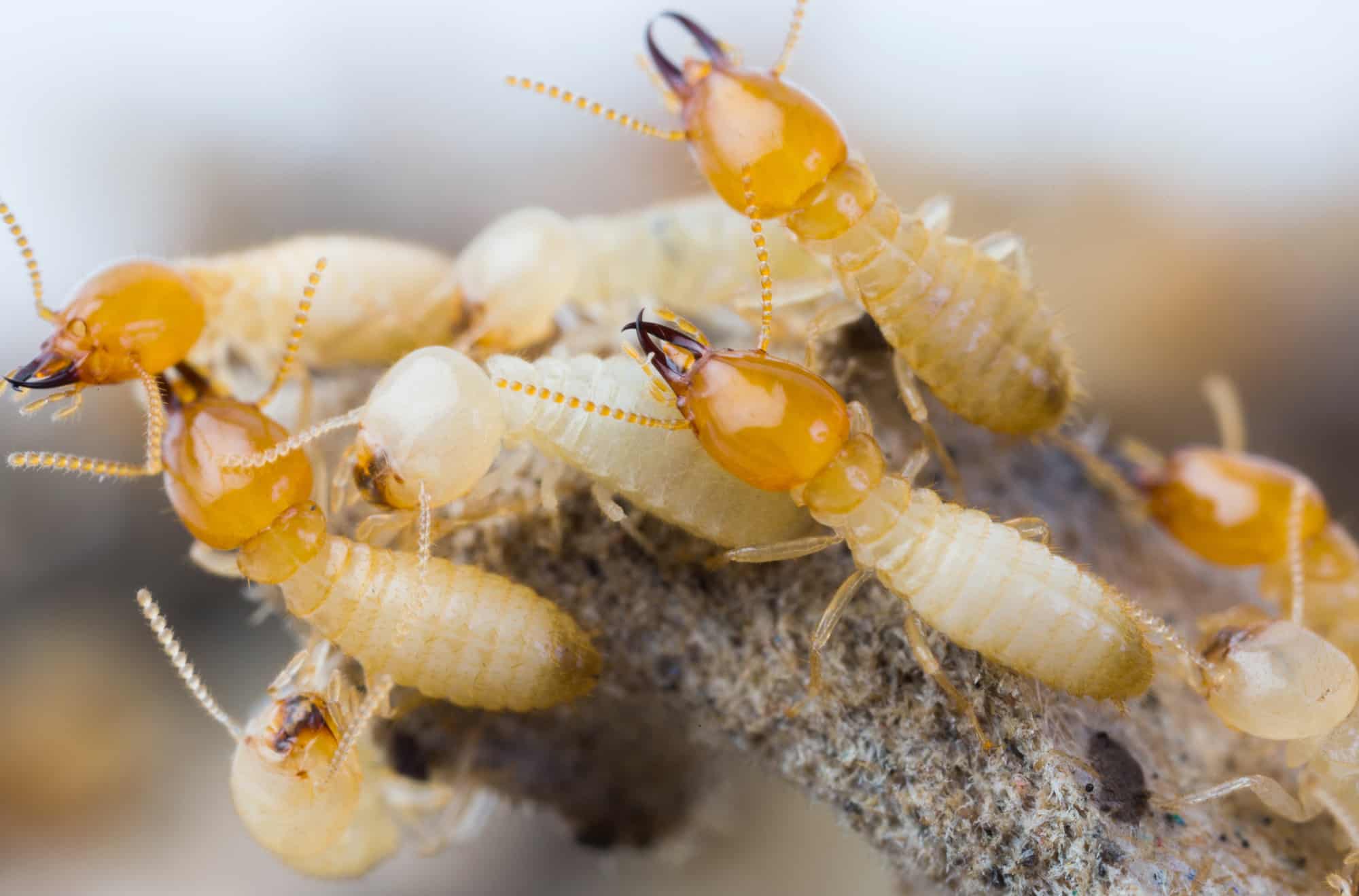
Termites
Live Termite-Free with Pointe!
Pointe Pest Control is committed to keeping your home pest-free in every season. Our team of experienced and state-certified technicians are dedicated to providing safe and effective pest control services for the Western Illinois and Eastern Missouri areas. If a pest problem is not completely resolved after a visit, our technicians will return until it is eliminated.
Free Pest Control Quote
Small But Mighty
Hierarchy of a Pest
Types of Termites
Call a Termite Expert Today!

Initial Inspection

Baits and Barriers

Termite-Free Guarantee
Results of an Invasion
Preventing the Damage
Pointe Tackles Termites
Extremely happy with the service
He dusted to discourage web building and also put pest control granules around the house to deter the likes of termites and ants. I am extremely happy with the service. This was my first experience with Pointe Pest Control and they have definitely earned my continued business.
Frequently Asked Questions About Termites
Why are termites considered one of the most destructive pests?
Termites cause damage by feeding on cellulose found in wood and structural materials. Because they tunnel deep inside wood and remain hidden, infestations often go unnoticed for months or even years.
This hidden activity allows colonies to grow large and cause significant structural damage. That is why early detection and professional termite control are critical.
In addition to structural weakening, termites can compromise support beams, flooring systems, and wall framing without obvious surface damage. This makes infestations particularly dangerous for homeowners and property managers who may not realize the severity until repairs become costly.
Professional termite control focuses not only on eliminating active colonies but also on preventing future damage through inspections, targeted treatments, and long-term monitoring.
How can I tell if I have a termite infestation?
Common signs of termites include mud tubes on walls or foundations, discarded wings, hollow-sounding wood, and droppings known as frass. Swarming termites inside or around the home are also a strong indicator.
Because termites avoid light and human contact, professional inspections are often the most reliable way to confirm an infestation.
Many termite infestations are discovered during routine inspections rather than homeowner observation. This is because damage often occurs inside walls, beneath flooring, or below ground level.
Scheduling a professional inspection ensures that subtle warning signs are identified before major structural damage develops.
What types of termites are found in Illinois and Missouri?
The most common species in Illinois and Missouri is the Eastern Subterranean Termite. These termites live underground and enter structures through cracks in concrete or foundations.
Drywood termites are less common in the region but may still be introduced through infested furniture. Proper identification during inspection ensures that the correct treatment approach is used.
Eastern Subterranean Termites form large underground colonies and rely on soil contact, which is why foundations, basements, and crawl spaces are common entry points.
Correct species identification is critical because treatment strategies vary depending on termite behavior, nesting habits, and moisture requirements.
How does Pointe Pest Control inspect for termites?
Termite inspections begin with a thorough evaluation of the property to locate visible damage, entry points, and signs of active colonies. Technicians inspect both interior and exterior areas where termites commonly travel or nest.
The goal of inspection is to identify the main nest and determine the extent of activity. This allows treatments to target the entire colony, not just visible damage.
Inspections also focus on moisture-prone areas, wood-to-soil contact, and structural features that increase termite risk. These conditions are documented to support long-term prevention.
This detailed inspection process ensures that treatment plans are precise, effective, and tailored to the specific property.
Are termite inspections more detailed than general pest inspections?
Yes. Termite inspections are more detailed and intensive than general pest inspections because of the potential structural risks involved. Technicians focus heavily on wood-to-soil contact, foundations, and moisture-damaged areas.
These inspections are designed to support long-term control, documentation, and treatment planning rather than short-term surface solutions.
Unlike general pest inspections, termite inspections often include detailed reporting and long-term risk evaluation. This is especially important for real estate, construction, and property management needs.
The added depth ensures that termite activity is not only addressed immediately but also prevented moving forward.
Do you provide termite inspections for contractors and developers?
Yes. Pointe Pest Control offers termite inspections for contractors, developers, and property professionals who need accurate assessments for construction, renovation, or property evaluation.
These inspections help identify existing termite activity and conditions conducive to future infestations, supporting informed project decisions.
Termite inspections for contractors often support compliance, planning, and budgeting during construction or redevelopment projects. Early detection reduces costly delays and future liability.
Professional documentation from these inspections provides confidence for developers, buyers, and stakeholders.
What is a termite treatment plan and how is it customized?
Termite treatment plans are created after inspection and are customized based on the size, location, and severity of the infestation. Pointe Pest Control does not rely on one-size-fits-all solutions.
Common treatment methods include baiting systems and barrier treatments, both designed to eliminate colonies and prevent continued damage.
Treatment plans may combine multiple methods depending on termite pressure and structural layout. This ensures both immediate elimination and long-term protection.
Customization allows treatments to align with property use, safety needs, and infestation behavior.
How do termite baiting systems work?
Termite baiting systems rely on worker termites carrying bait back to the colony. Once shared within the nest, the bait disrupts the colony’s survival.
Because termites forage continuously, baiting is highly effective at eliminating large colonies over time rather than just stopping surface activity. Pointe uses the Sentricon® system with Always Active™ technology for ongoing termite control.
Baiting systems are especially useful for targeting colonies that are difficult to access directly. This makes them effective for long-term population control.
Monitoring ensures that bait stations remain active and effective throughout the treatment process.
What are termite barrier treatments?
Barrier treatments create a protective boundary around or beneath a structure. Termites attempting to cross this barrier are unable to continue their tunneling activity.
Some barriers include termiticides for added effectiveness. These treatments are commonly used in conjunction with baiting for comprehensive control.
Barrier treatments are often used during construction or as part of proactive termite prevention strategies. They help stop infestations before termites reach the structure.
When combined with inspections and monitoring, barrier treatments provide strong long-term protection.
Are termite treatments safe for families and occupants?
Yes. Pointe Pest Control prioritizes safety by using EPA-approved treatments and applying only what is necessary to resolve the infestation. Treatments are placed strategically rather than broadly applied.
Technicians clearly explain treated areas and safety considerations, allowing occupants to feel confident during and after service.
Safety-focused application minimizes exposure while ensuring effectiveness. This is especially important for occupied homes and commercial buildings.
Clear communication and professional application are key components of responsible termite control.
What is a termite warranty and why is it important?
A termite warranty provides ongoing protection against specific termite species, typically Eastern Subterranean Termites. It ensures continued inspections and treatment if termites are found.
Warranties are especially valuable for long-term protection and risk management, particularly for commercial and multi-property owners.
A termite warranty helps reduce unexpected costs by covering future inspections and retreatment under defined conditions.
This added protection provides peace of mind and financial predictability.
Do you offer annual termite warranty inspections?
Yes. Properties under termite warranty receive annual inspections by termite specialists. These inspections focus on identifying active termites around the exterior of the structure.
If termites are found during a warranty inspection, treatment is provided at no additional cost, offering peace of mind to property owners.
Annual inspections also identify new risk factors such as moisture issues or structural changes. Addressing these early strengthens long-term protection.
This proactive approach supports consistent termite prevention.
Can Pointe Pest Control take over an existing termite warranty?
Yes. Pointe Pest Control can often take over existing termite warranties from other providers. This allows property owners to maintain coverage without starting over.
In many cases, this transition can also result in cost savings and simplified renewal management.
Warranty consolidation is especially helpful for property managers overseeing multiple buildings. It reduces administrative complexity.
Seamless transitions ensure uninterrupted termite protection.
Do you offer termite services for property managers and multi-property portfolios?
Yes. Pointe Pest Control offers specialized termite plans for property management companies, apartments, and commercial portfolios. These plans are designed to be efficient and cost-effective.
Portfolio and corporate discounts are available, making termite protection more manageable across multiple properties.
These services include streamlined inspections, easy renewals, and consistent documentation.
This structure supports long-term asset protection and budget planning.
What is a WDI report, and why is it important?
A WDI report, or Wood Destroying Insect report, documents visible termite activity and conditions conducive to infestation. These reports are commonly required during property transactions.
They provide official documentation that helps buyers, sellers, and property managers understand termite risks and responsibilities.
WDI reports support transparency and informed decision-making during sales, refinancing, or property evaluations.
Accurate reporting protects all parties involved.
How does termite control differ from general pest control?
Termite control requires more specialized inspection, treatment, and documentation than general pest control. Because termites impact structural integrity, services are more detailed and long-term.
General pest control focuses on surface pests, while termite control targets hidden colonies and long-term prevention.
Termite services also often involve warranties, annual inspections, and formal reports.
This specialized approach reflects the higher risk termites pose to structures.
How can homeowners and property managers prevent termite infestations?
Preventative steps include repairing leaks, sealing cracks, reducing wood-to-soil contact, and keeping firewood elevated and away from structures. Moisture control is especially important.
Professional preventative termite services add an extra layer of protection by identifying risks before infestations occur.
Routine inspections help uncover hidden vulnerabilities such as moisture-damaged wood, foundation gaps, and structural changes that may attract termites. Addressing these issues early significantly reduces long-term damage risks.
For property managers and multi-unit buildings, preventative termite programs provide consistent monitoring across all properties, helping protect investments and reduce unexpected repair costs.
What happens if termites return after treatment?
If a termite infestation is not fully resolved, Pointe Pest Control technicians will return until the problem is eliminated. This commitment is part of the termite-free guarantee.
Ongoing inspections, warranties, and follow-up services ensure long-term protection and continued support.
Termite warranties are designed to provide peace of mind by covering retreatment when active termites are detected during the warranty period. This ensures infestations are addressed promptly without added financial stress.
Continued monitoring and scheduled inspections help confirm that treatments remain effective, and that new termite activity is identified early.