
Summary: Ant control services often result in increased activity, but why? This blog provides the answers by looking into the typical control process and seeing how it impacts the colonies. Pointe Pest Control delivers efficient pest solutions.
______________________________________________________________________________________________________________________________________
If you have an ant infestation, professional services are the way to go. The trained technician will be able to target the source with their advanced treatments and exclusion work. However, you might notice something strange after your service ends.
What if we told you that it’s normal for your ant issue to get worse after treatment? More than that, it’s actually true that this problem needs to get worse before it gets better – and it will. Let’s uncover the reasons why your ant issue might get visibly worse right after a professional service.
The Usual Treatments
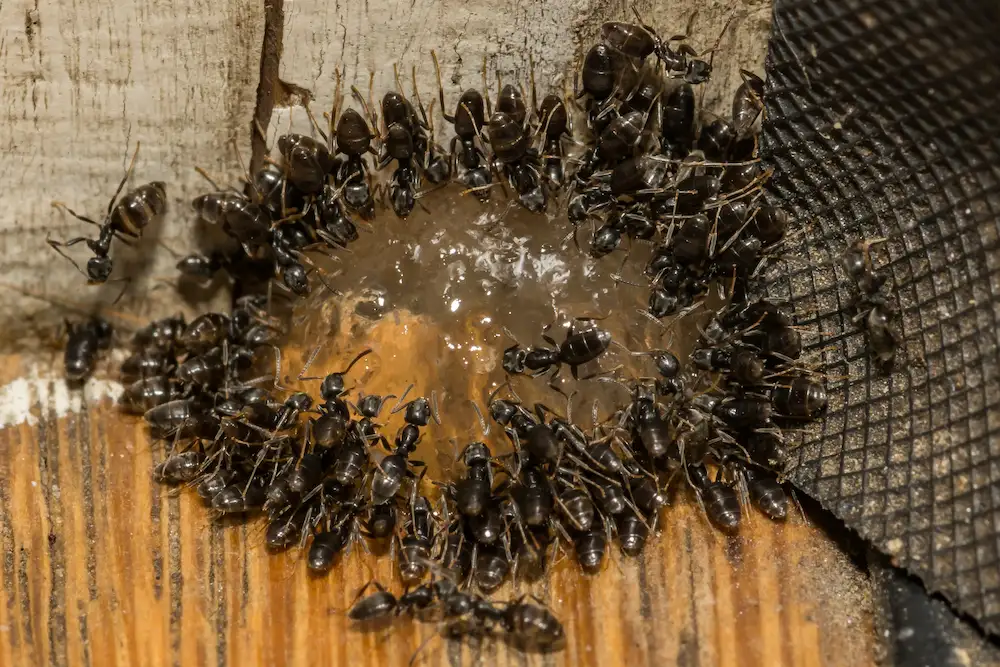
Every good ant service starts with an assessment of the situation. Why? The technician needs to identify the present species because that will determine the exact treatments needed to end the problem. There are two main types of treatments: bait and non-repellent spot treatments.
Bait comes in many forms, but liquid and gel are the most effective. It’s placed near the nest and in the direct paths of the workers. Depending on the species and its preferences, the bait will either be protein-based or sugar-based. Both are generally appealing to ants, but some are more drawn to one over the other.
Non-repellent spot treatments are sprays or granules. These products are supplemental help for the baits. The idea is that the workers will transfer all of the treatments to their colony. That’s why these treatments are applied as close to the nest as possible.
Ant control services are rarely a quick experience. We need the workers to bring the bait back to their colony (more on this in a second), which is a big task since their colonies can have thousands of insects. That’s why we actually don’t want the pests to die right away. If they do, the treatments won’t affect the majority of their members!
The technician will schedule a follow-up service to monitor the bait’s progress and reapply as needed. They should also advise you on prevention tips, like storing your food properly and removing leaf litter outside. This is all helpful, but it still doesn’t answer the titular question…
Taking the Bait
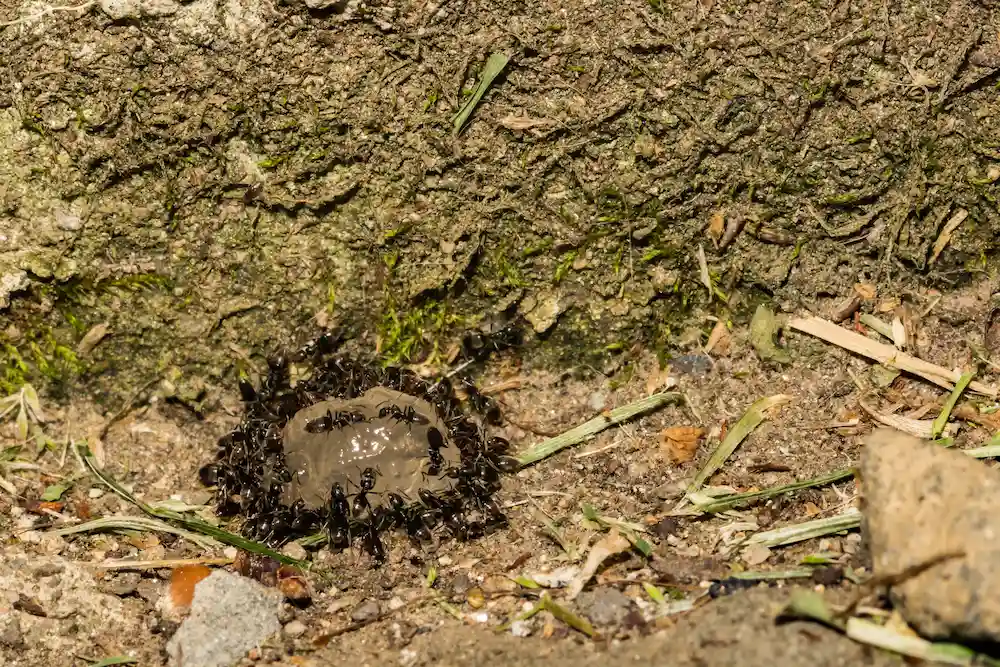
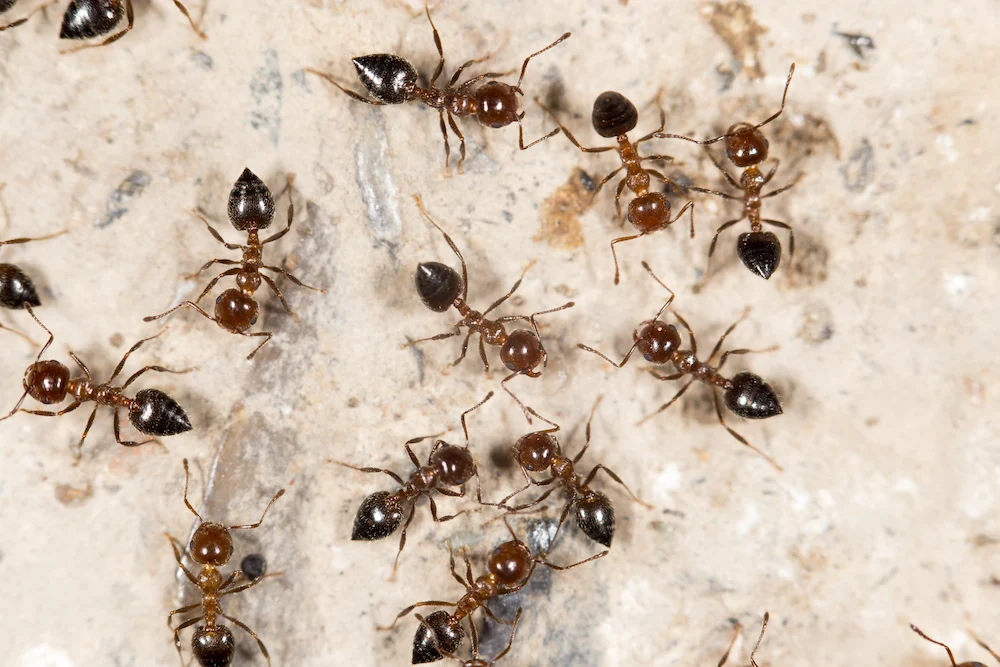
The very short answer to that question is: the bait. Since it’s literally made to attract ants, the presence of bait causes a temporary surge in the number of visible insects in your home. We know seeing a full army of ants is overwhelming, especially after you just had a professional treat the invasion. But this sight is actually a good thing (yes, really!).
The more ants you see after a service, the quicker the bait will get to the rest of the colony. This is essential for effective ant control. The poison is integrated into the bait so that the ants unknowingly bring it all back to their nest. After all, the worker ant’s purpose is to retrieve food for its family.
Bait is so efficient that the focus of the technician’s treatment doesn’t have to be the full nest, like it was decades ago. As long as the bait is in the main foraging paths and there are spot treatments near their nest, the colony will be taken care of in no time.
We Need Them Alive!
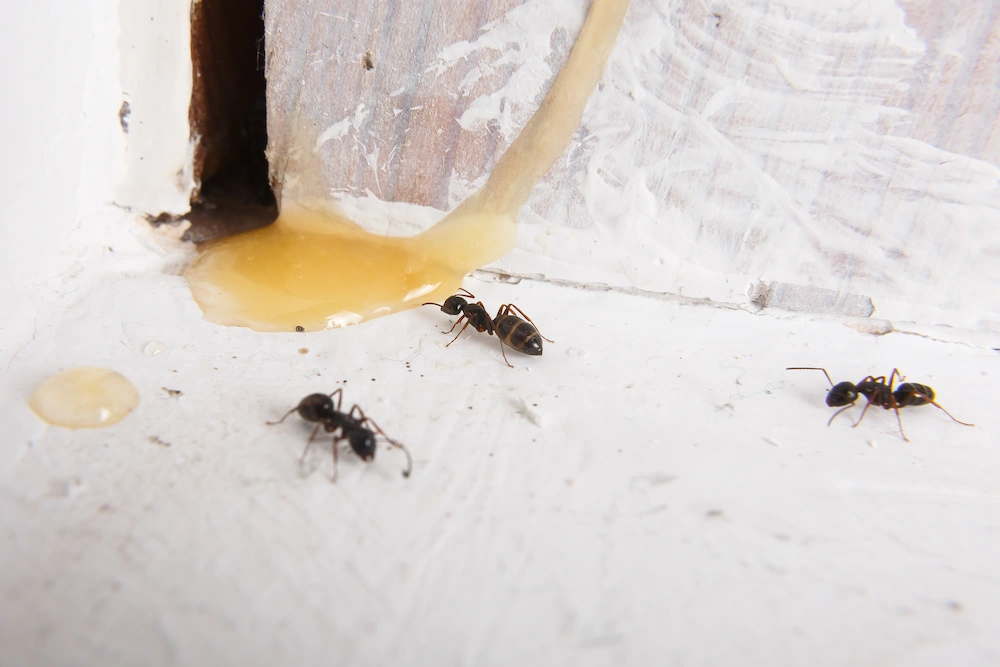
We know it’s incredibly tempting, but do not kill the ants you see after your house is treated. If you squish them right away, the bait (and poison) won’t get to the colony. Store-bought sprays are also a bad idea since they just kill the bugs you see, not the ones you don’t see. They could also drive the survivors further into hiding, making the situation worse.
Generally, you should start seeing less ants about a few days after the service. The foragers completed the hard work for us (thanks!) by feeding the bait to their brethren. If it’s a huge infestation, it can take a couple of weeks for every ant to be eradicated.
Ant control is slower since the goal is total elimination of the colony, including the queen. That being said, there are a few other factors that affect the number of ants you see after a service.
A Host of Other Reasons
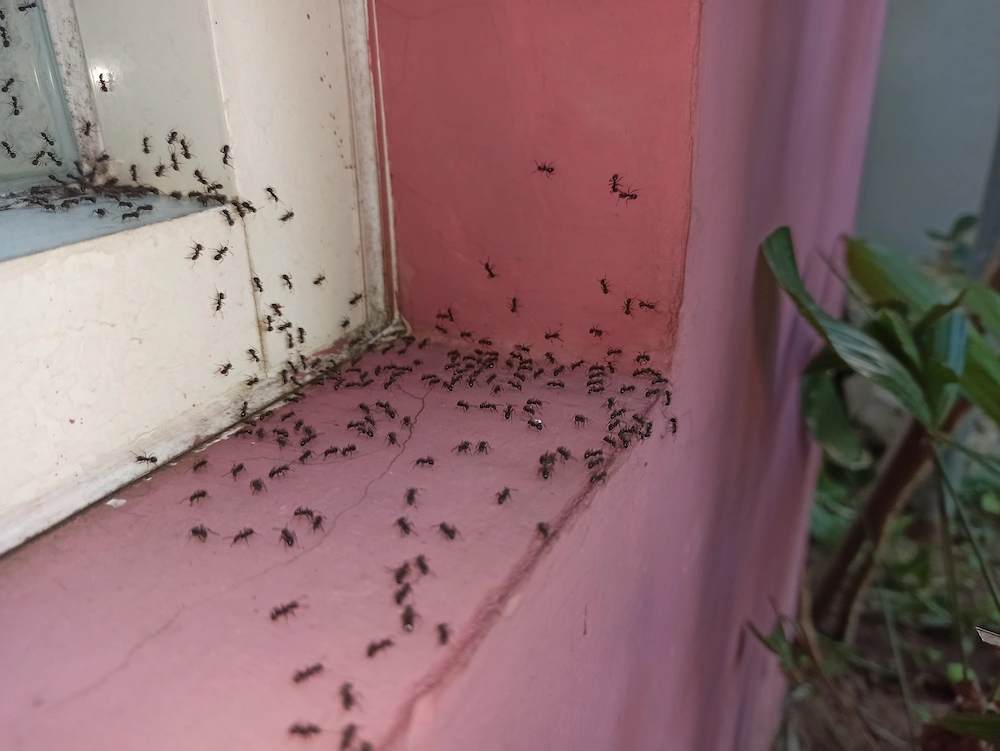
Bait is the primary reason why you see more ants after a service, so you can blame it on the nature of this effective treatment. If you’re someone who enjoys finding every reason why something happens (we relate), there are other possibilities to consider.
These are 5 potential reasons why you’re seeing more ants after the service:
- It was your house’s first ant service ever. The initial treatments for any pest problem often result in increased activity because the products push them out of hiding. This sounds like a bad thing, but the pests wildly moving around means that the treatments are working!
- It was a massive infestation. Like we said earlier, the size of the infestation does make an impact on the time it takes to be resolved. A larger colony means the workers have more ground to cover with the bait.
- It’s a new horde of young ants. Eggs aren’t always impacted by treatments, so a new generation might’ve hatched after your service. Between the bait and the supplemental treatments in your next service, these young pests will still get treated.
- It rained recently. These insects aren’t big fans of the rain. Their underground nests get flooded, so a big rainstorm causes them to seek shelter indoors. If it rained since your service, the whole colony might be trying to escape the wet weather.
- It’s a competition between bait and food. Ants are very food-motivated. If you have a lot of open food or an overflowing trash can, these pests might turn away from the bait in favor of these food sources. Keep the trash contained and your food stored properly to avoid this issue.
Also, one bait might be more effective than the other. For example, odorous house ants love sugar, but grease ants prefer protein. Your technician will examine the situation during the follow-up service, so they can adjust the type and number of baits to speed things along.
How Do I Know When to Call?
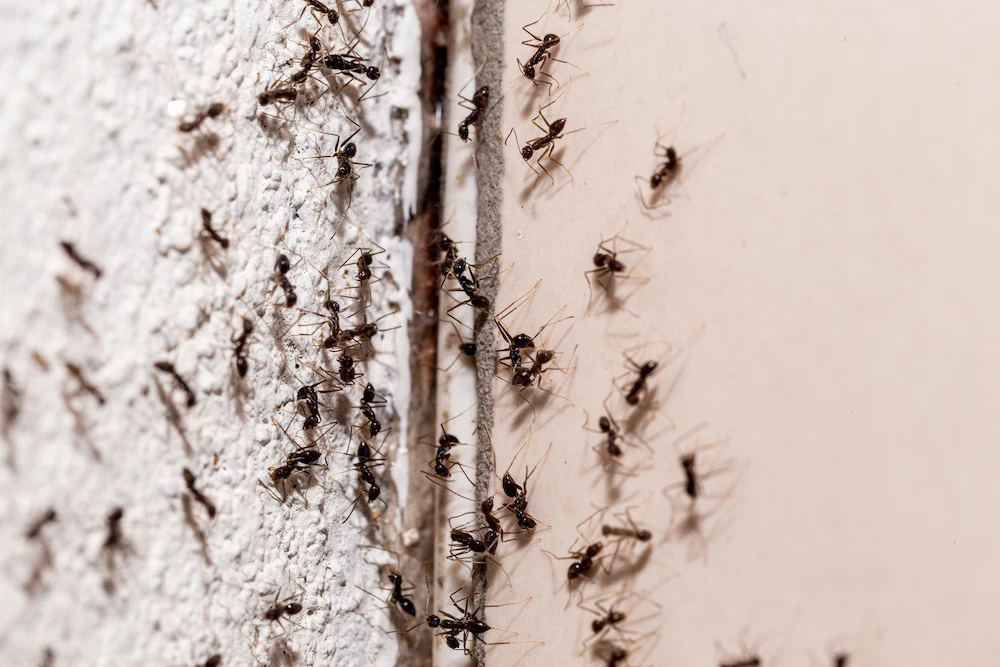
It’s completely understandable if this question is now on your mind. After all, how can you tell the difference between a “normal” increase and a concerning increase in activity?
After a couple of weeks, your problem should be basically solved. There might be a few stragglers if any of the previously-listed reasons apply, but the main issue is over. We suggest contacting your pest control company if:
- The number of visible ants isn’t lowering.
- The ants are becoming more active or overpopulated.
You can still confirm with your pest control provider that the progress is normal. Like we said earlier, you might already have a scheduled follow-up service. There is nothing wrong with contacting your company to ask questions about your services. Our hope is that this blog gave you some relief that the treatments are working — good things just take time!
Keep the Pests Away with Pointe!
Ant infestations clearly need efficient treatments in order to be eradicated. When you need reliable ant control, look no further than Pointe Pest Control! Our highly-trained technicians first inspect the areas of activity to determine the species, then use their findings to create a treatment plan that’s tailored to solve your specific issue.
We don’t waste time with surface-level treatments. When you receive our ant control services, you can be sure that we’ll get to the root of your problem. Contact us today for a free quote on our dependable services!
Citations
How does ant bait work?. (n.d.). Orkin. Retrieved June 20, 2025, from https://www.orkin.com/ask-orkin/ant-problem-has-gotten-worse
Thome, M. (2025, March). It can’t always be the hammer. Pest Control Technology, p. 76.
Woolf, N. (2022, April 11). What if I’m still seeing bugs after pest control?. Blue Sky. Available at https://www.blueskypest.com/blog/what-if-im-still-seeing-bugs-after-pest-control/ (Accessed on June 20, 2025).