

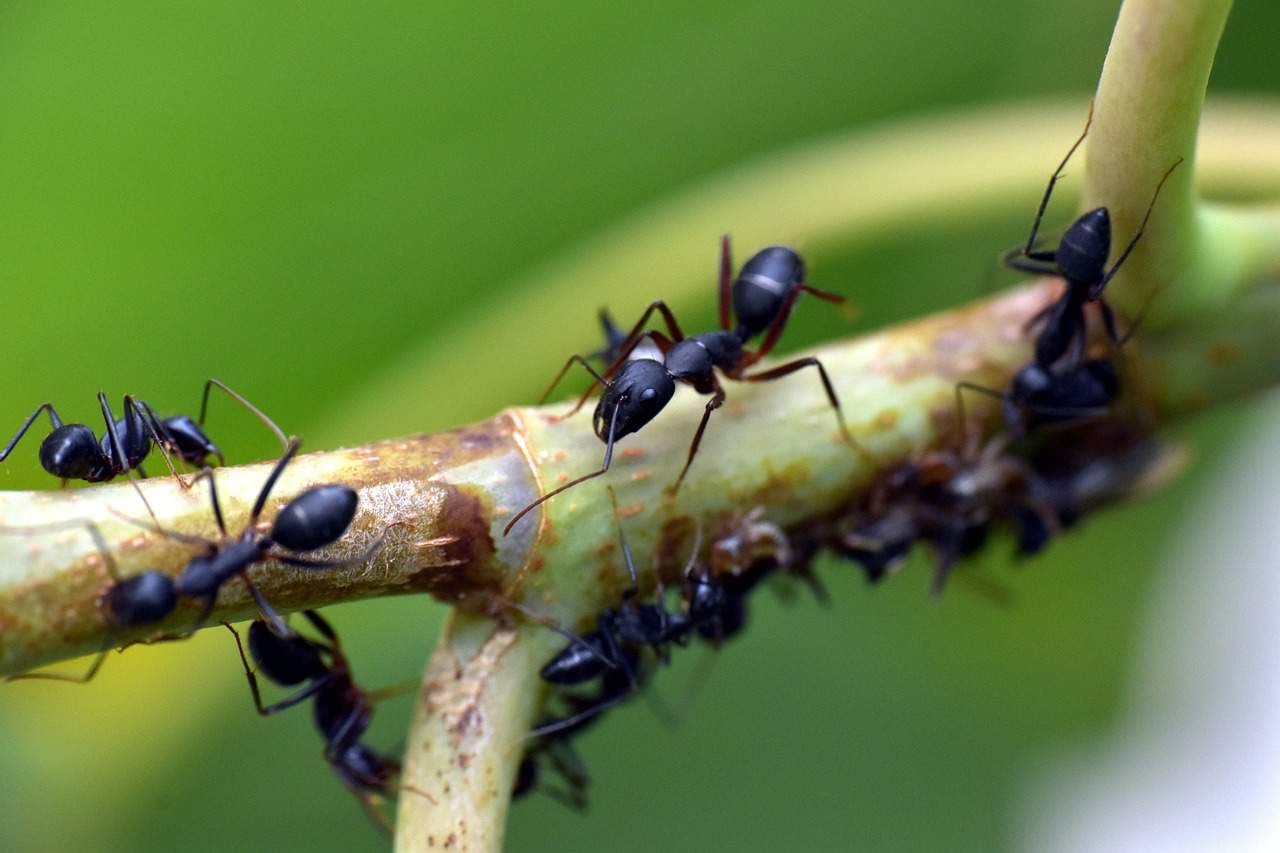
Ants
Live Ant-Free with Pointe!
Pointe Pest Control is committed to keeping your home pest-free in every season. Our team of experienced and state-certified technicians are dedicated to providing safe and effective pest control services for the Western Illinois and Eastern Missouri areas. If a pest problem is not completely resolved after a visit, our technicians will return until it is eliminated.
Free Pest Control Quote
Ants Love Food
Where Are Ants Most Common?
The Top Ant Species
Call an Expert Today!

Initial Inspection

Baits and Barriers

Pest-Free Guarantee
The Hazards of Ants
Don’t Let the Ants Come Marching In
Pointe Pest Control Has the Ant Control For You
No more live bugs inside my home
He came yesterday to spray outside of house to ensure pests stay out. Since he got the ants under control a month or so ago, I have not seen any live bugs inside my home. That’s the way I like it.
Frequently Asked Questions About Ants
Why do ants invade homes and businesses?
Ant invasions happen primarily because ants are searching for food. They are especially attracted to sugary and protein-rich items such as baked goods, meats, cereals, and candy that are not properly sealed.
Worker ants are responsible for locating food sources and carrying food back to the colony. As they travel, they leave behind pheromone trails that guide other workers to the same source.
Once ants find a reliable food supply, they will continue invading the area for weeks. This is why ant infestations tend to worsen over time without professional intervention.
How do ants communicate and spread throughout a building?
Ants communicate through pheromones, which are invisible chemical trails used to guide other ants. When a worker ant finds food, it marks a trail back to the nest.
Other worker ants follow this trail precisely, which is why ant infestations often appear in straight lines along walls, counters, and floors.
Breaking these pheromone trails is a key part of professional ant control. Without addressing the trail and the colony, ants will continue returning.
Where are ants most commonly found?
Ants are found almost everywhere in the world except extremely cold regions like the Arctic. Most species prefer outdoor nests and enter homes only to forage for food.
Common nest locations include underground soil, inside wood, and anthills made of dirt. The carpenter ant is a major exception, as it nests directly inside wooden structures.
Because ants are cold-blooded, they are more active in warm conditions. This makes ant problems especially common during warmer months.
Why are carpenter ants considered a serious problem?
Carpenter ants are often mistaken for termites because they damage wood. However, carpenter ants do not eat wood; they excavate it to build nests and tunnels.
They prefer moist or decaying wood and leave behind wood shavings near entry holes. These signs indicate an active infestation that requires immediate attention.
If left untreated, carpenter ants can weaken structural components. Professional inspection is necessary to locate nests and prevent further damage.
What are pavement ants and why do they invade buildings?
Pavement ants typically live under concrete, sidewalks, and driveways. They create small mounds of dirt and travel long distances in search of food.
They are attracted to grease, meat, and other food sources, which is why they commonly invade kitchens and restaurants. Pavement ants can enter walls with ease.
These ants can also bite or sting when disturbed. Their persistence makes professional control the most effective solution.
What makes odorous house ants different from other ant species?
Odorous house ants are known for nesting inside walls and under floors. They often invade homes in large numbers, especially during rainy or cooler seasons.
They feed on a wide variety of foods, including sweets, grease, dairy, and meats. This makes kitchens and pantries prime targets.
When crushed, these ants release a strong odor similar to rotten coconut or blue cheese. Their hidden nesting habits make them difficult to control without professional help.
How does Pointe Pest Control inspect for ant infestations?
Every ant control service begins with a thorough inspection. Technicians look for active ant trails, nesting areas, and entry points.
The inspection helps identify the ant species involved, which is essential for selecting the correct treatment method. Different ants require different strategies.
By locating the source of the infestation, Pointe Pest Control ensures treatments address the entire colony, not just visible ants.
How does Pointe Pest Control treat ant infestations?
One of the most effective ant treatments used is bait. Ants carry the bait back to the colony, spreading it through the nest and eliminating the population at its source.
Barrier treatments are also used to prevent ants from re-entering the structure. These methods work together for long-term control.
Because baiting relies on ant behavior, it is not instant. However, it provides consistent and reliable results when applied correctly.
Why isn’t spraying ants enough to solve the problem?
Spraying visible ants only kills workers and does not affect the colony or queen. This often causes ants to scatter and establish new trails.
Without eliminating the nest, ants will continue returning. Surface sprays provide only temporary relief and can worsen the infestation.
Professional ant control targets the colony itself, which is the only way to fully resolve the problem.
Are ant control treatments safe for families and pets?
Yes. Pointe Pest Control uses EPA-approved treatments that are applied carefully by trained technicians. Safety is prioritized in every service.
Treatments are placed in targeted areas where ants travel and nest, reducing unnecessary exposure.
Technicians explain treated areas and provide guidance to ensure peace of mind for families and pet owners.
Can ants contaminate food and surfaces?
Yes. Ants often travel through bacteria-rich environments before entering homes. As they crawl across food and surfaces, they can spread harmful bacteria.
Salmonella and E. coli are commonly associated with ant contamination. Any food that ants have accessed should be discarded.
Disinfecting surfaces and addressing infestations quickly reduces health risks.
Do ants pose any physical danger to people?
Some ant species can bite or sting if their colony is disturbed. Most bites cause minor irritation and redness.
However, species such as fire ants can cause painful stings and allergic reactions. Severe reactions like anaphylaxis require immediate medical attention.
Professional pest control helps reduce the risk of bites and stings by eliminating infestations safely.
How can homeowners help prevent ant infestations?
Food should be stored in airtight containers rather than original packaging. Cleaning crumbs and spills promptly reduces attractants.
Sealing cracks, gaps, and entry points around windows and siding is essential. Ants can enter through extremely small openings.
Regular inspection and sanitation help reduce the likelihood of recurring ant problems.
Can ants infest clean homes and businesses?
Yes. Ants do not invade based on cleanliness alone. Any structure with accessible food and entry points can be affected.
Even clean homes, restaurants, and offices can experience ant problems if conditions allow.
Preventative pest control is the best way to protect any space from ant infestations.
How long does ant control take to work?
Ant bait treatments take time because the bait must be carried throughout the colony. Results are gradual rather than immediate.
As more ants interact with the bait, colony activity decreases steadily. Patience is important for complete elimination.
Follow-up services help ensure all ants and entry points are addressed.
What happens if ants return after treatment?
If ant activity continues, Pointe Pest Control technicians will return to address the issue. Services include a pest-free guarantee.
The team is committed to treating every entry point and area of concern. Free callbacks ensure long-term success.
With professional care, homes and businesses can remain ant-free in every season.