
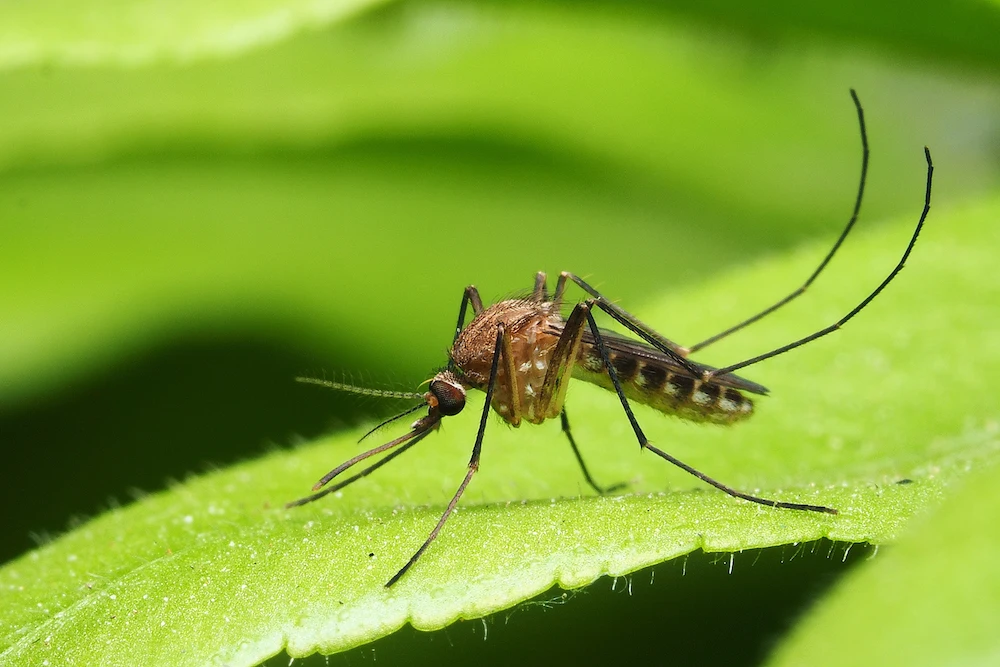
Summary: Jurassic Park is an exciting film franchise, but is the mosquito aspect realistic? This blog answers the question by examining the details of movie/novel science, habits of real insects, core issues with the experiment, and real world applications. Pointe Pest Control provides efficient solutions.
______________________________________________________________________________________________________________________________________
When we engage with fictional stories, we’re using our imaginations to answer the question “What if?”. This is clearly the case with the Jurassic Park franchise, as it explores the benefits and consequences of dinosaurs living in our modern world.
The newest installment, Jurassic World Rebirth, takes yet another angle on this idea. But it’s interesting to note that this horrified-wonder-filled scenario happens all because of one bloodsucking insect.
If you’ve seen the original movie or read the first novel, you’re familiar with the origins of this park. If you haven’t, don’t worry! We’ll give a brief overview of the fictional science that made these dinosaurs possible before we answer the titular question and determine if mosquitoes could cause a return to the Jurassic period.
Movie Science
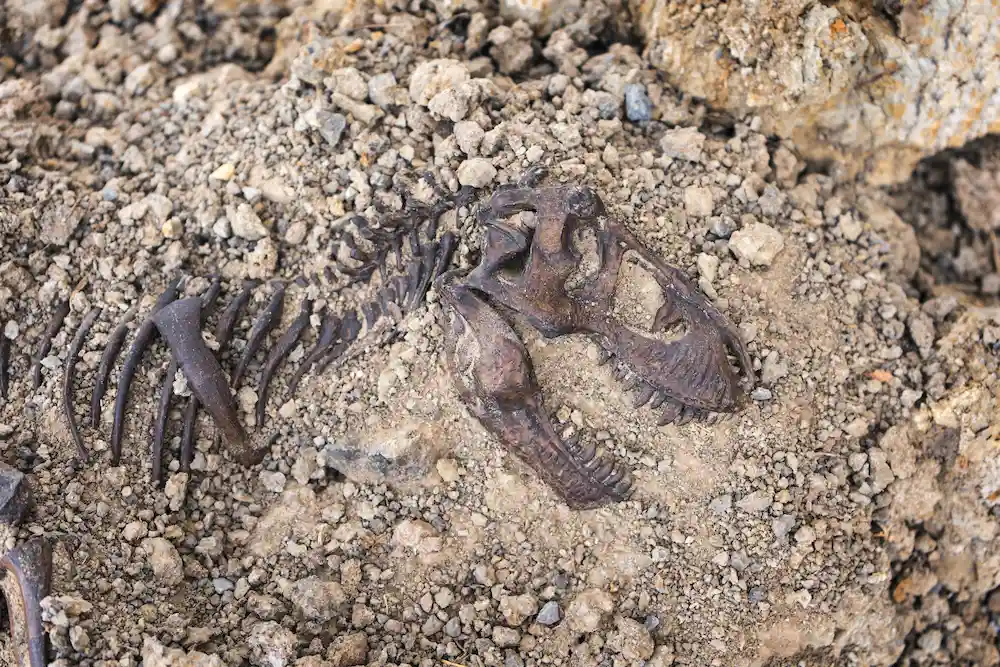
In the first movie and novel, the basic science behind the dinosaurs’ existence is that the dinosaur DNA is extracted from prehistoric mosquitoes that were encased in amber (remember John Hammond’s cane?). The film’s animated sidekick, Mr. DNA, gives the digestible details to both the characters and the audience.
Basically, prehistoric mosquitoes were preserved throughout the ages by being stuck in amber. The novel defines amber as “the fossilized resin of prehistoric tree sap” (Crichton, p. 101). The preserved mosquitoes still contained the blood they drank from dinosaurs and other animals, so InGen scientists extracted the dino-laced blood using syringes.
They combined the strands of dinosaur DNA with frog DNA in order to make the whole genome. The reconstructed DNA was then implanted in ostrich eggs that were carefully monitored and protected in a lab setting meant to emulate the Jurassic environment.
This process involved a lot of testing to ensure that the scientists were using the right DNA. As the novel explains, the scientists would take each mosquito and “extract whatever is in there, replicate it, and test it” to obtain the right “paleo-DNA” (Crichton, p. 102).
Control is essential to making the dinosaur park work, so that explains all of this testing and reconstructing. Another way that the scientists and John Hammond make sure the dinos don’t get outof control? They only breed female dinosaurs. That step proves to be irrelevant, but we don’t have time to get into that now…
Why Mosquitoes?
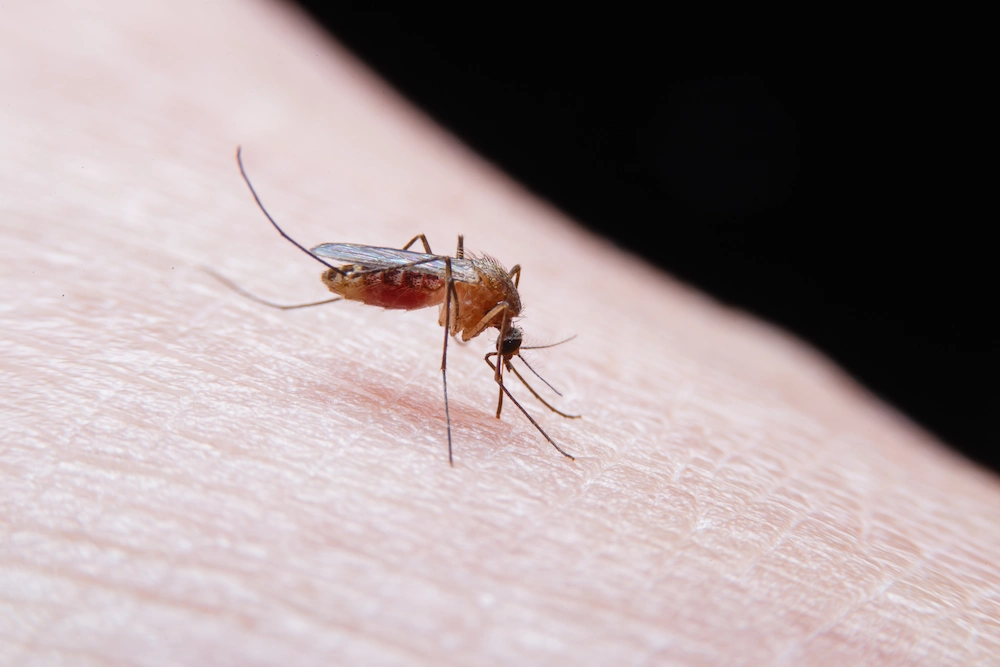
Why would mosquitoes be the key to dinosaurs? Well, we have a few thoughts. For one, the consumed blood is stored in the bug’s guts for their use. They don’t feed every day, so that blood isn’t immediately removed from their guts. Only female mosquitoes feed on blood because they need warm blood to create eggs.
Another reason why mosquitoes were the ticket to breeding dinosaurs is they are a strangely elegant pest. Make no mistake, they are gross bloodsuckers that can transmit diseases and give us itchy bites. But the long proboscis (mouth parts) and darting flight patterns make for a complex insect. We don’t see ticks or fleas being the stars of the show.
The third, and maybe the biggest, reason why mosquitoes were the Jurassic Park centerpiece is that it’s historically accurate! Mosquitoes were common in the Jurassic period. This story isn’t known for its airtight science facts — as noted by author Michael Crichton in his Acknowledgments — but this one is true.
The Main Issues
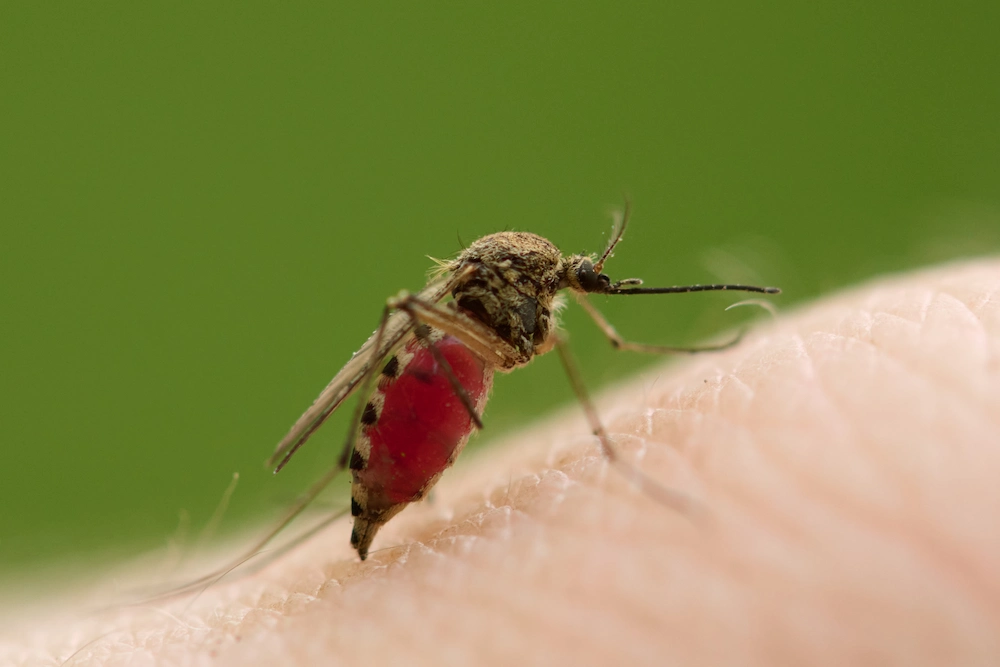
Now we get into the true analysis. This isn’t meant to ruin a beloved movie and novel for anyone (we analyze because we love!). It’s just an exploration of why this whole park might not work in our world. The way we see it, there are two main issues with this experiment that prevent it from being a real possibility.
The Mosquito
The first is the mosquito species used in the film. We understand why this was the species they chose; it’s so big that the audience can clearly see that it’s a real mosquito inside the amber. Jurassic Park uses the elephant mosquito, or Toxorhynchites, as a visual for the all-important insect.
What’s funny is that this mosquito is one of the very few that doesn’t eat blood! It only eats nectar, proven by its bent proboscis that’s angled for this purpose. The featured mosquito is also a male, which just furthers our point.
The DNA
The second issue is the dinosaur DNA actually surviving. Scientists have since explained the faults with this experiment, and a lot of it is based in DNA. For one, DNA wouldn’t survive millions of years in hot environments. DNA is best preserved in the cold, but even then, millions of years is a long time.
Speaking of which, the age is another point. In 2022, a new record was set for the oldest DNA. Plant and animal DNA fragments were found in Greenland, and they’re believed to be from the Pliocene era. For context, the Pliocene era started over 5 million years ago. The Jurassic period started over 200 million years ago. That’s a huge difference.
A basic issue with the DNA preservation is the amber itself. It’s definitely a cool set piece, but it’s not really reliable. Amber is pretty porous and wouldn’t fully protect the DNA. Plus, DNA strands break easily and often get infected or decay when they’re not properly preserved. A lot more care would need to be taken with the DNA to create dinosaurs.
Steps to Genetics

Back to mosquitoes, they’re a real health risk to humans due to the diseases they spread (malaria, Zika virus, etc.). With that in mind, it’s interesting to see how mosquito researchers and scientists are — maybe indirectly — taking inspiration from the science of Jurassic Park.
In 2021, over 5 million genetically modified mosquitoes were released in the Florida Keys. These Aedes aegypti mosquitoes were meant to mate with wild mosquitoes to give their female offspring a lethal gene that kills them before they reach adulthood. The scientists accomplished this by injecting the eggs with engineered DNA.
Why did this program exist? This was answered by Eric Caragata, Ph.D, assistant professor and mosquito researcher. According to him, the genes in mosquito genomes are able to “be modified to reduce mosquito population size or to make mosquitoes more resistant to key pathogens, like dengue” (Prevention).
This program isn’t the most sustainable over time. It relies on one species that, once altered, need to be constantly released. It would also be most effective in combination with removing stagnant water and cleaning out gutters. Still, the mosquito pilot program is an interesting step in the Jurassic Park direction.
Would It Even Work?
So, we’ve covered a lot of ground. We looked at the movie science behind this experiment, analyzed the issues with using mosquitoes and preserved DNA, and discussed the real results of altering mosquitoes. But would the Jurassic Park experiment actually work?
There are so many factors and variations that would need to be considered. Contamination is always a risk with delicate experiments like this. How would we know if the DNA is intact and can create accurate dinosaurs until it’s too late?
Dinosaur DNA being extracted from a mosquito’s gut and combined with frog DNA sounds incredibly messy. Birds are the closest living relative to dinosaurs since they technically have dinosaur genes. We’re not saying that using bird DNA would be foolproof, but it might give results that are a bit more accurate.
All in all, Jurassic Park’s dinosaurs are a result of a researched exercise in imagination. It’s not fact or a set of directions for us to follow. If it was, the finer details would need to be ironed out before anyone could say dinosaurs are in our future, not just in our past.
Keep Mosquitoes (and Dinosaurs?) Away with Pointe!
Although we don’t provide dinosaur control services (could you imagine the size of those traps?), our mosquito services provide lasting protection. At Pointe Pest Control, we enjoy keeping Illinois and Missouri homes free of these bloodsuckers.
Our licensed technicians target breeding areas for maximum efficacy. In other words, we keep mosquitoes away by treating them at the source.
Mosquito season is still going strong, and it won’t end until the eggs stop hatching in October. We’re committed to protecting your home and family from these seasonal bloodsuckers. Contact us for a free quote on our reliable services today!
***Disclaimer: Section 107 of the United States Copyright Act recognizes “fair use” copywriter content as such: “Notwithstanding the provisions of sections 106 and 106A, the fair use of a copyrighted work, including such use by reproduction in copies or phono-records or by any other means specified by that section, for proposes such as criticism, comment, news reporting, teaching, scholarship, or research, is not an infringement of copyright.” This blog post may contain certain copyrighted works and characters that were not specifically authorized to be used by the copyrighted holder(s), however, the content on this post qualifies as “commentary” on the copyrighted works under the “fair use” doctrine of the U.S. Copyright Act and is thereby protected by federal law. Furthermore, we do not claim any ownership or creative rights of any characters on this list, and all rights outside of the fair use doctrine belong to the respective owner(s).
Citations
Ashworth, J. (2022, December 7). The world’s oldest DNA represents a two-million-year-old ecosystem. Natural History Museum. Available at https://www.nhm.ac.uk/discover/news/2022/december/worlds-oldest-dna-represents-two-million-year-old-ecosystem.html (Accessed on June 27, 2025).
Crichton, M. (1990). Jurassic Park. Alfred A. Knopf, Inc.
Gray, L. (2020, December 2). Welcome to Jurassic Park: Can genetically modified mosquitoes create a healthier and more sustainable future?. Colorado State University: School of Global Environmental Sustainability. Available at https://sustainability.colostate.edu/humannature/lyndsey-gray/ (Accessed on June 27, 2025).
Harney, C. (2022, June 21). “Bingo, dino DNA”: Is Jurassic Park’s mosquito-to-dinosaur experiment possible?. Green Pest Services. Available at https://greenpestservices.net/bingo-dino-dna-is-jurassic-parks-mosquito-to-dinosaur-experiment-possible/ (Accessed on June 27, 2025).
Miller, K. (2022, April 21). ‘Jurassic Park’ genetically modified mosquitoes actually work. Prevention. Available at https://www.prevention.com/health/a39774851/what-are-genetically-modified-mosquitoes/ (Accessed on June 27, 2025).
Okoyomon, A. (2022, June 6). Science of Jurassic Park: Can an extinct animal be recreated from a DNA-filled mosquito. Science World. Available at https://www.scienceworld.ca/stories/science-of-jurassic-park-can-an-extinct-animal-be-recreated-from-a-dna-filled-mosquito/ (Accessed on June 27, 2025).
Stein, R. (2015, April 22). Why do mosquitoes like to bite you best? It’s in your genes. NPR. Available at https://www.npr.org/sections/health-shots/2015/04/22/401469931/why-do-mosquitoes-like-to-bite-you-best-its-in-your-genes (Accessed on June 27, 2025).
Wasley, A. (2015, June 11). Jurassic World & the science behind making a dinosaur. The Credits. Available at https://www.motionpictures.org/2015/06/jurassic-world-the-science-behind-making-a-dinosaur/ (Accessed on June 27, 2025).