

Summary: House mice leave small clues before the problem becomes obvious. This post explains how to spot early signs, protect food, and stop mice from returning with practical prevention steps.
__________________________________________________________________________________________________________________________________
House mice are tiny, quiet, and way too comfortable around people. In St. Louis area homes, they often slip in during colder snaps, rainy weeks, or any time food is easy to access. The tricky part is that you might not see the mouse at all, even when the problem is already growing. This guide covers the most common house mouse infestation signs, what those clues really mean, and the prevention steps that keep mice from turning your pantry into their personal snack bar.
Why House Mice Show Up in the First Place

House mice are not moving in because your home is “dirty.” They show up because your home is warm, safe, and full of the basics: food, water, and hiding spots. A small gap at the foundation, an open garage door for a few minutes, or a worn door sweep is enough for a mouse to squeeze through and disappear into a wall void.
Once they are inside, mice follow routines. They travel the same edges of rooms, use the same quiet routes behind appliances, and return to the same nesting areas. That consistency is helpful for homeowners because the evidence tends to show up in predictable places.
The Clearest Signs of Mice in the House
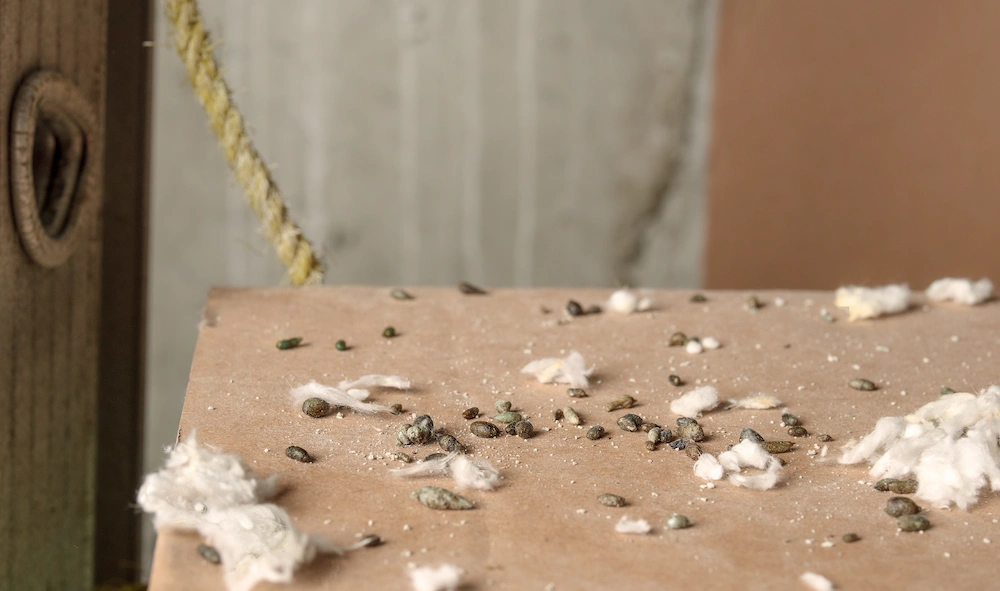
Seeing a mouse is an obvious red flag, but it is not the only one. In fact, the most reliable signs of mice in the house are usually the small, easy-to-miss clues left behind during nightly activity.
Here are the most common indicators homeowners notice first:
- Small, dark droppings in drawers, cabinets, under sinks, or behind appliances
- Shredded paper, insulation, or fabric used for nesting
- Gnaw marks on pantry packaging, baseboards, or stored items
- Greasy rub marks along walls, pipes, or floor edges
- Scratching or light scurrying sounds at night, especially in walls or ceilings
If you see droppings in more than one room, or you keep finding new droppings after cleaning, assume the activity is ongoing. Mice reproduce quickly, so early signs can turn into a bigger problem fast.
The Food Contamination Problem Most People Don’t Think About
When it comes to mice contaminating food, the risk is not just the bag they chewed through. Mice leave behind droppings, urine, and hair as they travel, and they do not stay “in one spot.” That means a mouse can contaminate countertops, shelves, and stored items without chewing a visible hole in anything.
That is why it matters to protect food from mice even if you have not seen major damage yet. A single mouse can ruin more food than it eats, simply by running through storage areas night after night.
Where House Mice Hide and What They Look For

Mice prefer tight, undisturbed spaces. In many Missouri and Illinois homes, their favorite hideouts include the gap behind the stove, the void under the dishwasher, the back corner of a basement storage room, or the insulation in an attic. They will also build nests in boxes, cluttered shelves, and even the motor compartment under a refrigerator.
Food is the top driver, but water matters too. Pet bowls, condensation lines, leaky pipes, and even a damp basement corner can keep mice comfortable. If your home has a combination of crumbs, clutter, and easy access, mice have everything they need to stay put.
What to Check First in Kitchens and Pantries
Kitchens are high-traffic areas for mice, which makes them a great place to find evidence. Start with the edges, not the middle. Look behind the trash can, under the sink, and where the wall meets the floor behind appliances. If you store pet food in the garage or pantry, check the container and the surrounding floor for crumbs and gnawing.
If you have recurring activity, it is worth learning more about professional options like Pointe’s rodent control services in St. Louis. A thorough inspection can reveal entry points and nesting areas that are easy to overlook during DIY checks.
House Mouse Prevention Tips that Actually Work
If you are wondering how to prevent house mice, the best approach is simple: remove food access, remove shelter, and block entry points. Traps can help with current activity, but prevention is what keeps the problem from restarting next month.
Start with the outside. Most mouse problems begin at the exterior, then move inward. Walk your foundation line and look for gaps around pipes, cracks near utility lines, and openings under siding. Pay attention to garage corners, where weather stripping tends to wear out first.
Food Protection Steps for Everyday Life
The easiest prevention wins are usually in food storage. To keep kitchens and pantries less attractive:
- Store dry goods in airtight containers, not thin bags or cardboard boxes
- Keep pet food in sealed bins and avoid leaving bowls out overnight
- Clean crumbs from under appliances and along baseboards weekly
- Take out trash regularly and rinse recyclables before storing them
These steps do not just reduce odors. They remove the “free buffet” that convinces mice to stay and bring friends.
Seal the Routes Mice Use Most
Mice run along edges and squeeze into tight spaces. Add door sweeps, repair torn screens, and seal small exterior gaps with appropriate materials. If you can fit a pencil into the opening, treat it as a potential entry point. Indoors, reduce clutter near walls so it is harder for mice to hide and easier for you to spot early evidence.
Yard habits help too. Keep vegetation trimmed back from the house, store firewood away from the foundation, and avoid letting leaf piles sit against exterior walls. Those spots give mice cover while they look for a way inside.
When It’s Time to Call a Professional
If you are seeing repeated droppings, hearing scratching in the walls, or finding fresh gnaw marks, it is time to bring in help. DIY traps can catch a few mice, but they do not solve the entry points or nesting areas that keep the cycle going. A professional inspection also helps confirm whether you are dealing with house mice or another rodent, which affects the treatment plan.
Pointe Pest Control focuses on inspections, exclusion, and targeted treatments that fit your home and your schedule. If you want a clear plan and long-term protection, contact Pointe Pest Control for a free quote. We know the house mouse infestation signs inside and out, so you can rest assured that your rodent problems won’t be a problem for Pointe’s experienced team!
Citations
Begum, J. (Dr.). (2024, January 18). Mice: Health risks, habits, and extermination. WebMD. Available at https://www.webmd.com/a-to-z-guides/know-about-house-mice (Accessed on January 19, 2026).