
Summary: This article explains how carpenter ants divide responsibilities within a colony, including reproduction, foraging, nest excavation, communication, and colony maintenance.
__________________________________________________________________________________________________________________________________
Carpenter ants can seem surprisingly organized when they invade a home. One ant may be searching for food while another is expanding a nest, caring for young, or helping protect the colony. This division of labor is one of the main reasons a carpenter ant colony can operate so efficiently.
Understanding how carpenter ants work so quickly starts with looking at the colony as a team. Individual ants perform specialized jobs, and their ability to communicate and cooperate allows the entire colony to accomplish tasks that would be impossible for a single ant.
Why Carpenter Ant Colonies Are So Organized
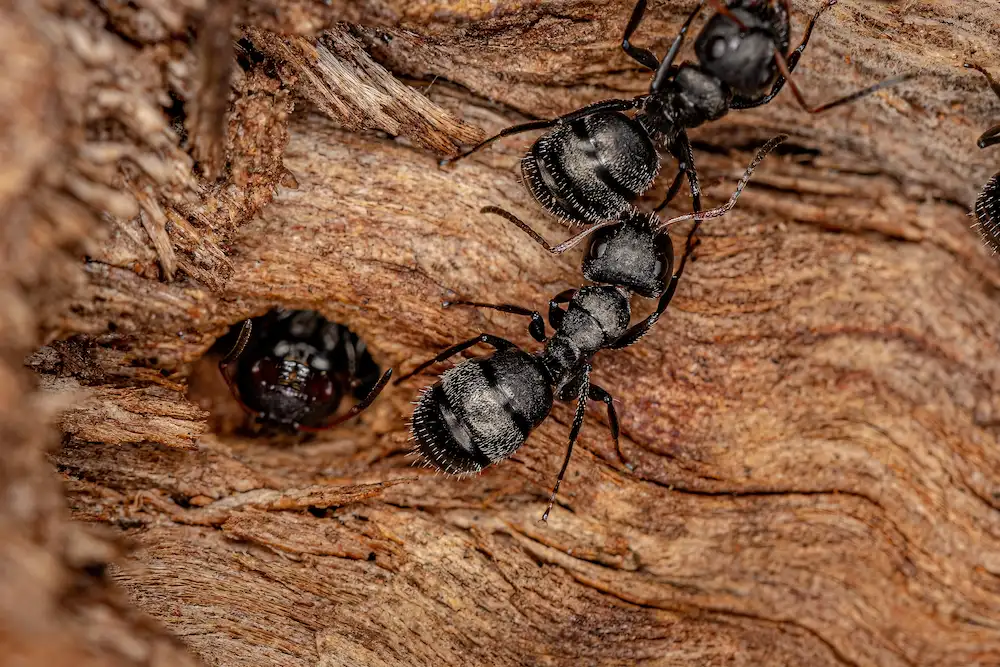
Carpenter ants are social insects that live in colonies with defined roles. Rather than every ant performing every task, different members of the colony concentrate on specific responsibilities.
This organization allows several jobs to happen simultaneously. Workers can search for food while other ants maintain nesting areas and care for developing larvae. Meanwhile, the queen remains protected so she can continue producing eggs.
The Queen Keeps the Colony Growing
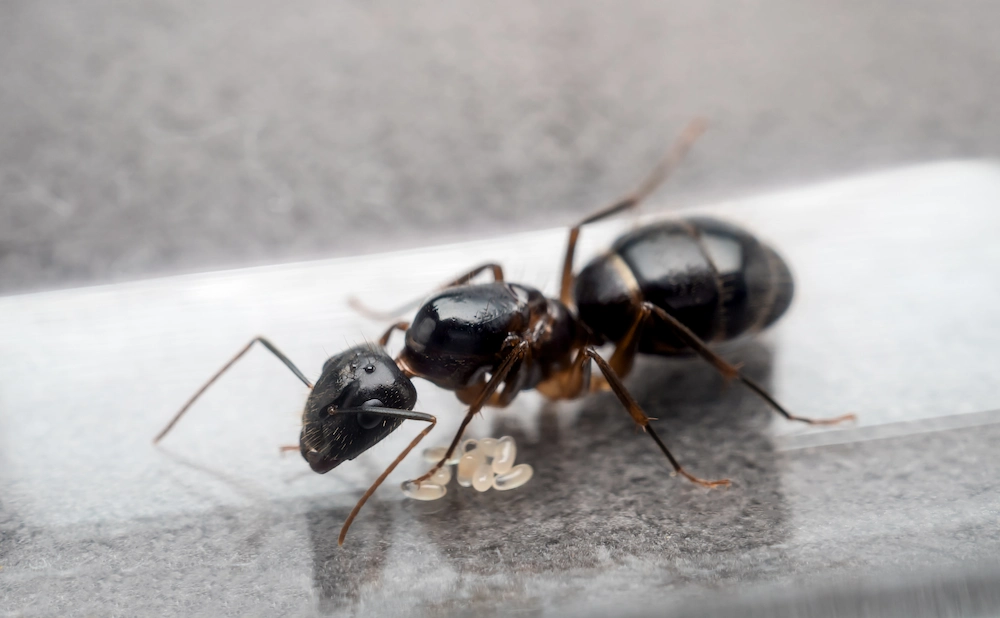
The queen has one of the most important jobs in a carpenter ant colony. Her primary role is reproduction. After establishing a colony, she lays eggs that develop into new workers and, eventually, reproductive ants.
The queen typically remains inside a protected nesting area instead of searching for food. Worker ants care for her and the developing young, allowing her to focus on reproduction as the colony expands.
Why Finding the Queen Can Be Difficult
Because the queen stays deep within the nest, homeowners are unlikely to see her walking through a kitchen or along a baseboard. The carpenter ants commonly spotted indoors are usually workers searching for resources.
This is one reason killing individual ants does not necessarily eliminate an infestation. The reproductive center of the colony may remain hidden elsewhere in the structure or even outdoors.
Worker Ants Handle Most of the Daily Jobs
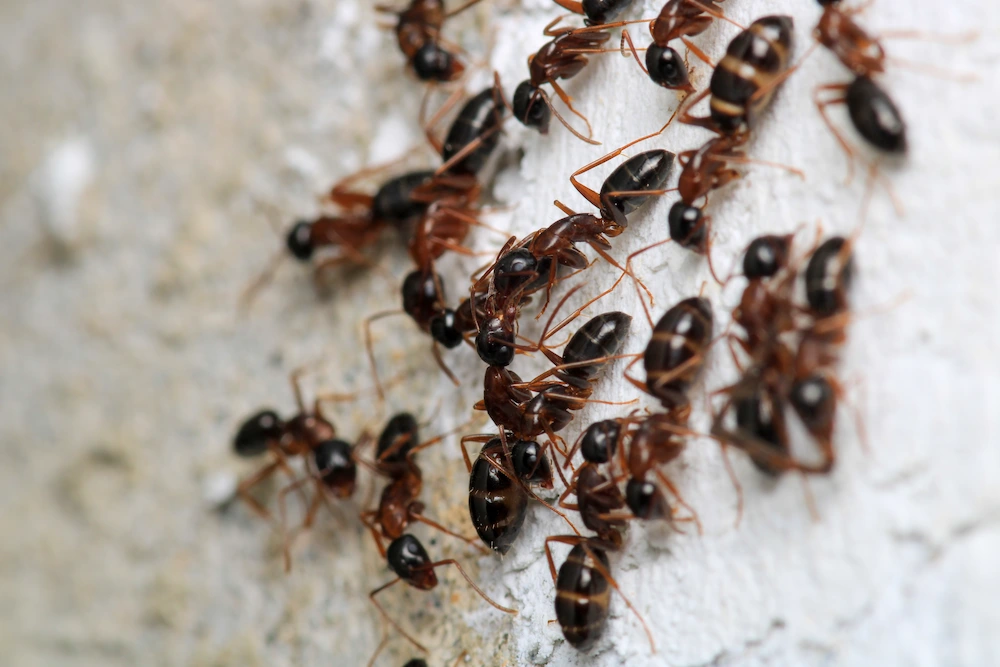
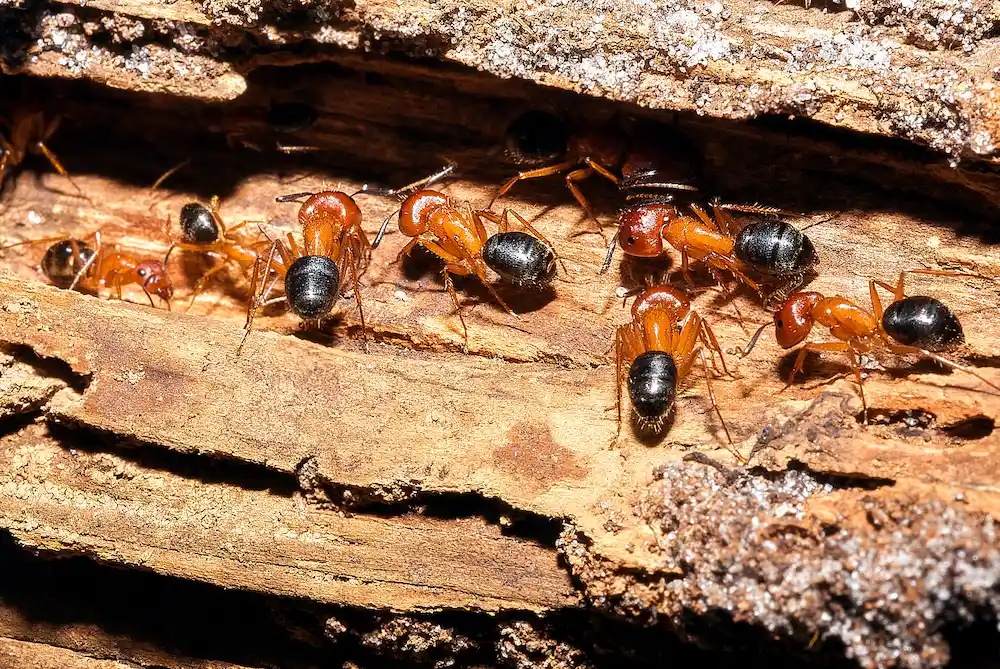
Workers perform many of the tasks that keep a carpenter ant colony functioning. Depending on the needs of the colony, they may forage, maintain the nest, care for larvae, or help move resources.
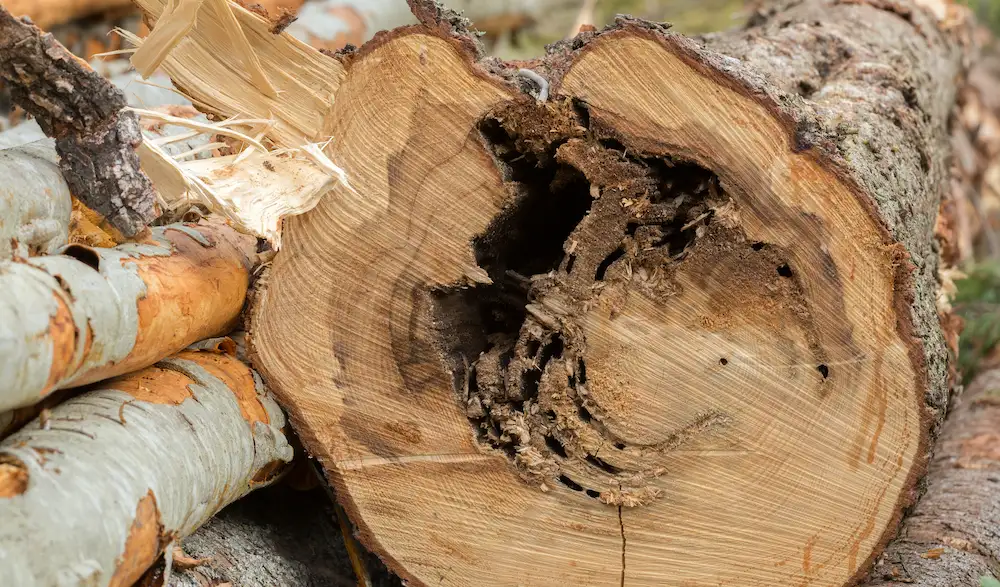
Some carpenter ant workers also excavate wood to create nesting galleries. Unlike termites, carpenter ants do not eat the wood. They remove it to create smooth tunnels and chambers where the colony can live.
Carpenter Ants Can Divide Up the Workload
Worker ants vary in size, and larger workers can help with jobs such as defending the colony or handling larger food sources. Smaller workers may perform other duties within and around the nest.
This division of labor means multiple tasks can happen at once. It is one of the reasons carpenter ant activity can appear so coordinated when workers are moving along established trails.
Carpenter Ants Communicate to Get Jobs Done
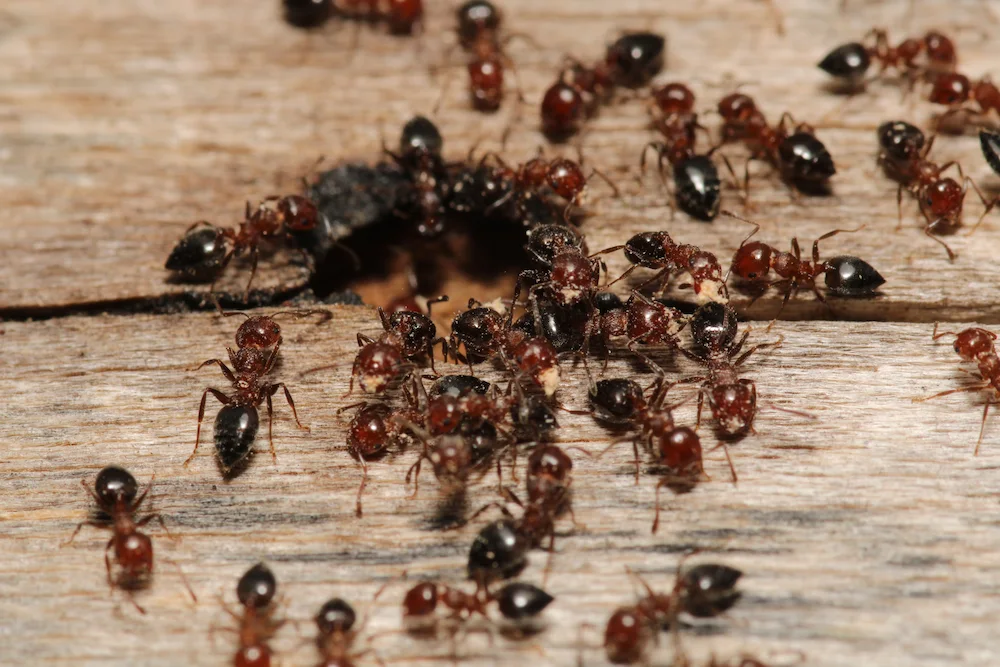
Organization would not be very useful without communication. Carpenter ants rely heavily on chemical signals called pheromones to exchange information.
A worker that discovers food can establish a scent trail that other workers follow. This recruitment behavior allows the colony to send additional ants to a valuable resource instead of requiring every worker to search independently.
Ants can also use physical contact and their antennae when interacting with colony members. Together, these communication methods help workers respond to changing conditions around the nest.
How Carpenter Ants Find and Move Food
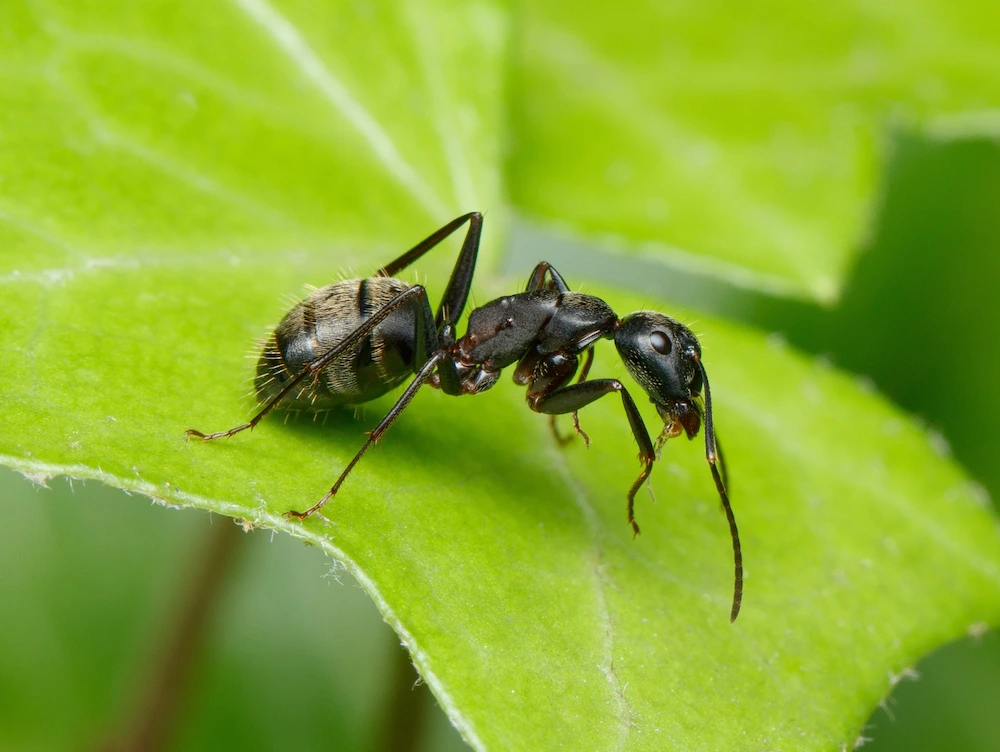
Carpenter ants eat a variety of foods, including sweets and protein sources. Outdoors, they may feed on honeydew produced by aphids or prey on other insects. Indoors, accessible crumbs, spills, pet food, and sugary substances can attract foraging workers.
When workers locate a reliable food source, other ants may begin following their chemical trail. That is why seeing one carpenter ant can sometimes be followed by additional activity along the same route.
Why Carpenter Ants Excavate Wood
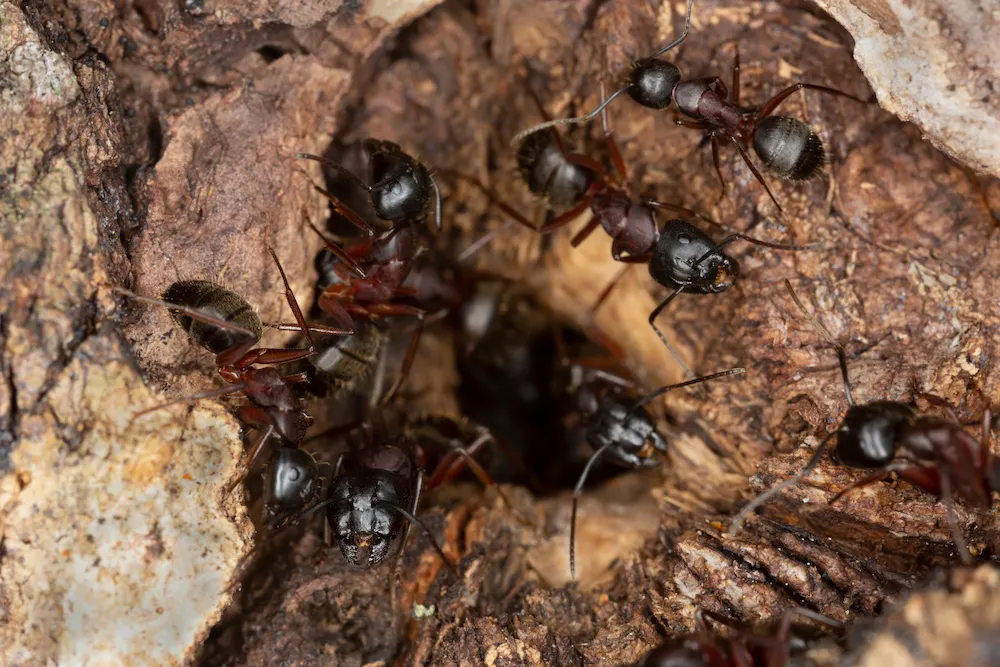
Carpenter ants are strongly associated with wood damage, but their behavior is different from termites. Instead of consuming cellulose, carpenter ants excavate wood to create nesting space.
Wood affected by moisture can be especially attractive because it may be easier to excavate. Areas around leaking windows, roofs, plumbing, or poorly ventilated spaces can provide favorable nesting conditions.
Signs of Carpenter Ant Activity
Because nests are often concealed, homeowners may notice indirect evidence before locating the colony itself. Common warning signs can include:
- Large ants traveling through the home, particularly at night
- Sawdust-like material near cracks or openings
- Winged ants emerging indoors
- Rustling sounds from wall voids in some infestations
Finding repeated activity in the same area is worth investigating, especially when moisture-damaged wood is nearby.
Why a Few Carpenter Ants Can Signal a Larger Problem
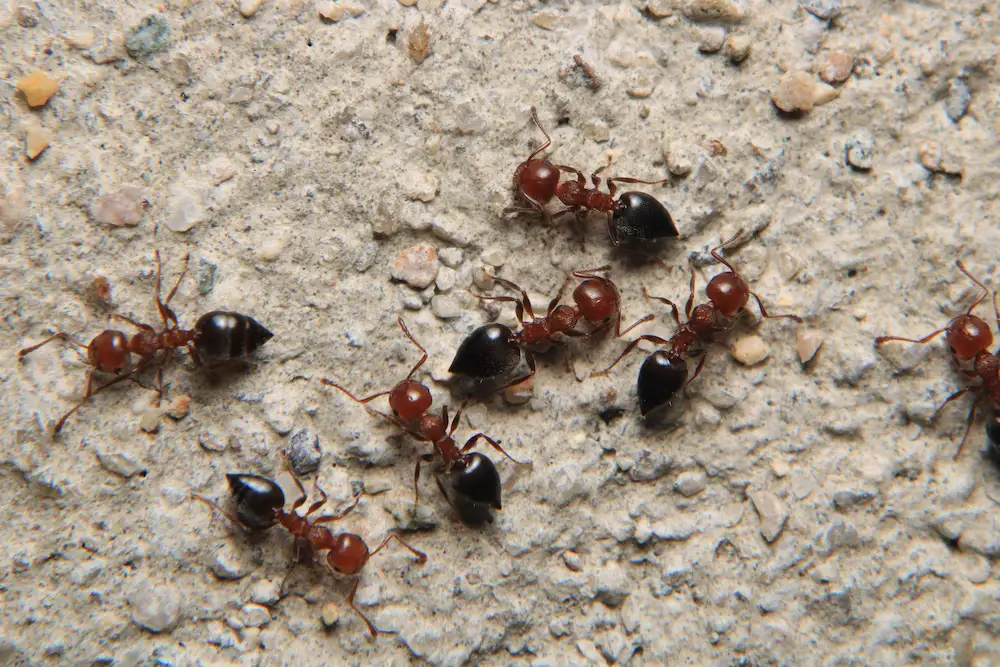
The ants homeowners see are only a portion of the colony. Workers can travel away from the nest while the queen, larvae, and other colony members remain concealed.
Carpenter ants may also establish satellite nests separate from the main colony. This can make an infestation more complicated than following a visible trail and treating the ants found at the end of it.
How to Discourage Carpenter Ants Around Your Home
Prevention focuses on removing the conditions carpenter ants use for food, moisture, shelter, and access. Keeping the structure dry and addressing damaged wood can make potential nesting areas less attractive.
Homeowners can also:
- Repair plumbing, roof, and window leaks
- Trim branches and vegetation away from the structure
- Store firewood away from the house and off the ground
- Seal gaps around windows, doors, siding, and utility openings
Controlling other insects around the property can also help because carpenter ants may use them as a food source.
When Carpenter Ant Activity Needs Professional Attention
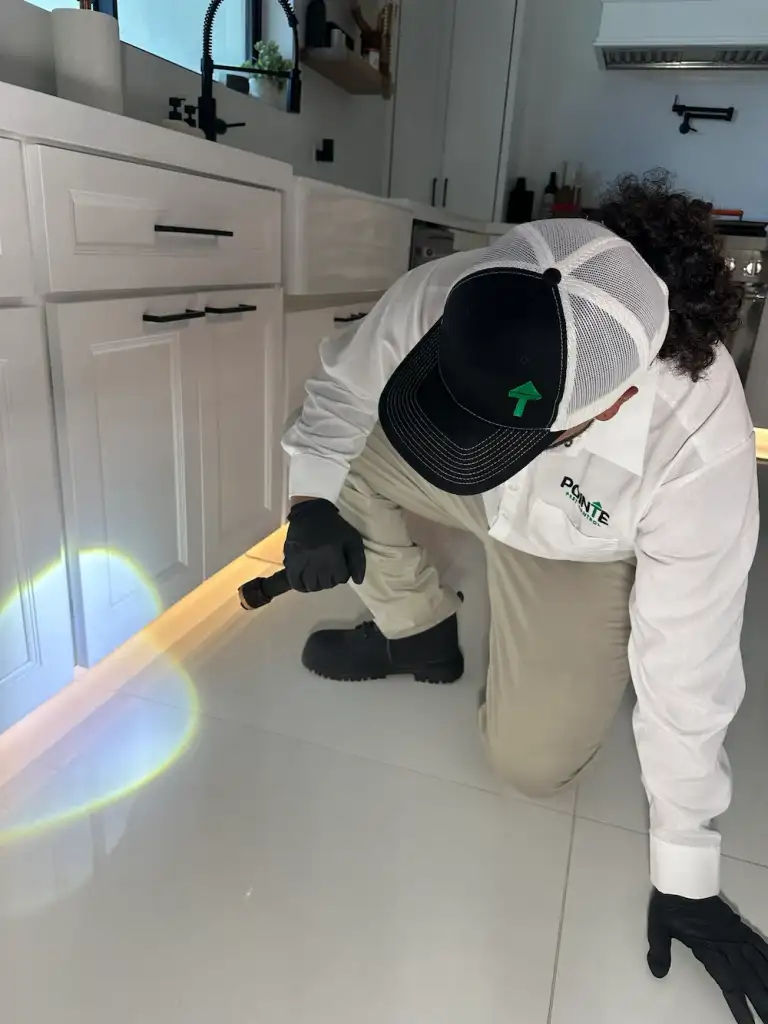
Seeing an occasional ant does not always indicate an established indoor colony. Repeated carpenter ant sightings, piles of excavated material, winged ants indoors, or activity coming from walls can be stronger reasons to investigate.
Pointe Pest Control’s professional ant control services can help identify nesting areas and determine an appropriate treatment approach. Homeowners dealing with recurring local pest activity can also explore St. Louis pest control services for broader household pest protection.
Conclusion
Carpenter ants work efficiently because colony members do not all perform the same job. Queens reproduce, workers forage and maintain nests, and colony members communicate to coordinate their activity.
That teamwork can make a carpenter ant infestation difficult to address by simply killing the ants you see. Recognizing how the colony operates can help homeowners spot warning signs earlier and address the conditions that allow carpenter ants to thrive. Contact us for a free quote on our efficient carpenter ant control services today!
Citations
Bailey, D. (2012, February 27). [Ant control] Carpenter ants up close. Pest Control Technology. Available at https://www.pctonline.com/article/pct0212-carpenter-ants-control/ (Accessed on August 17, 2026).