
Summary: Some spiders build webs and wait, while others hunt without leaving a trace. This guide explains how spiders hide in St. Louis area homes with and without webs, and where to look for each type.
__________________________________________________________________________________________________________________________________
Most people picture a spider hiding behind a web strung across a dusty corner, but plenty of species living in St. Louis area homes never build one at all. Some spiders rely on speed and stealth instead, which means a home can have a noticeable spider population without a single web ever showing up.
Understanding how spiders hide in homes, both with webs and without them, makes it much easier to know where to look and what kind of activity to expect from each type.
Neither hiding style makes a spider more dangerous on its own. What matters more is which species is present and how large the population has grown, both of which are easier to figure out once you know where each type tends to spend its time and what it is most likely feeding on nearby.
Web Building Spiders Wait, Hunting Spiders Chase
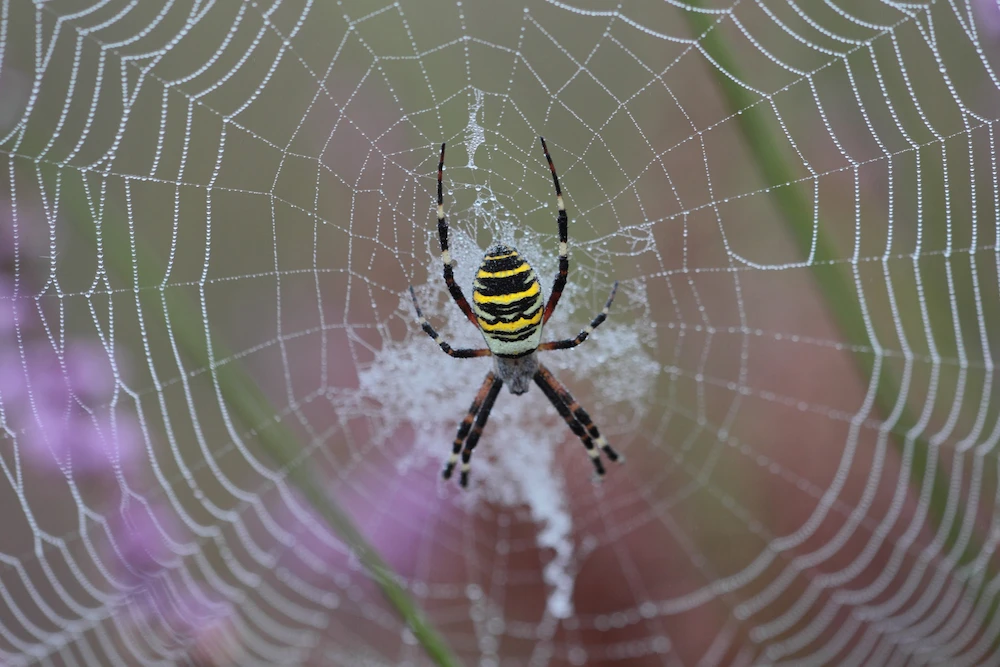
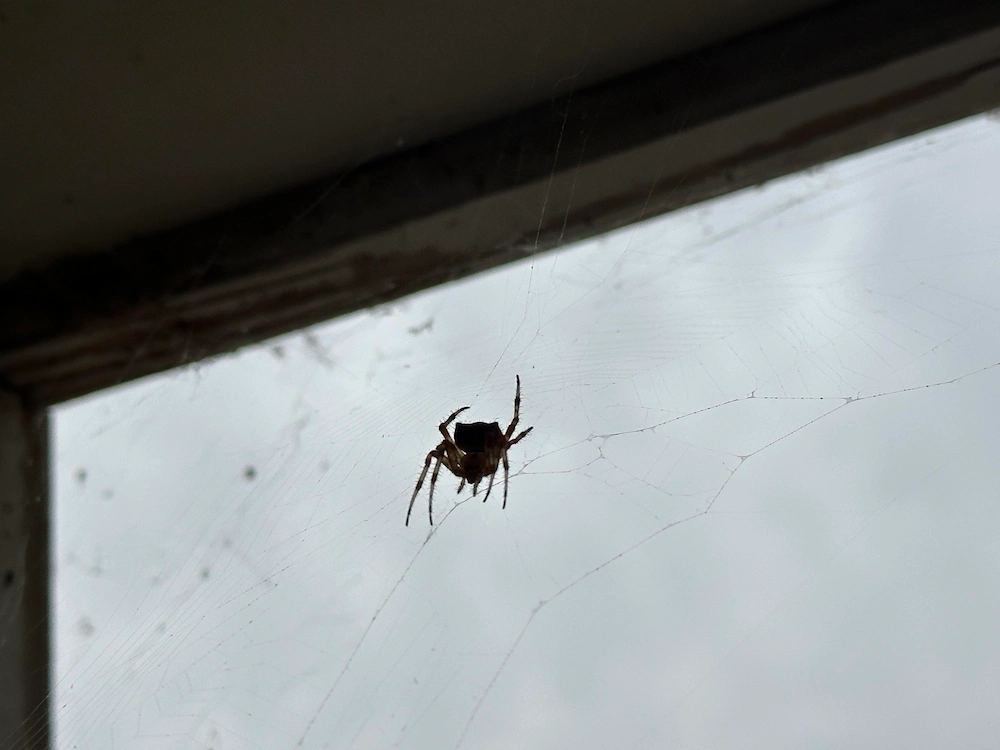
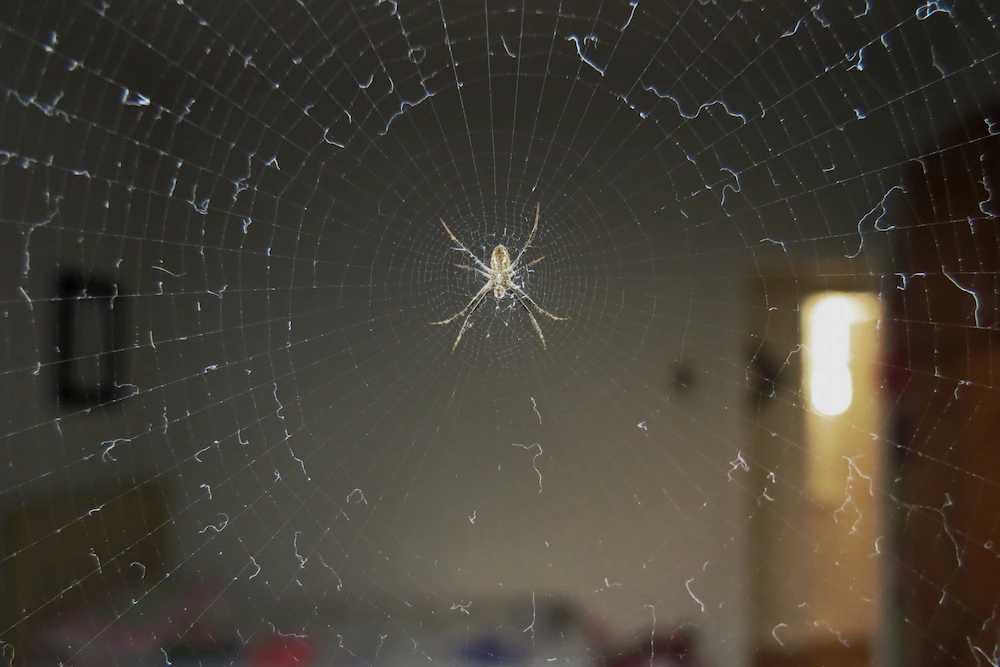
Web building species, like common house spiders and cellar spiders, set up in one spot and wait for prey to come to them. They tend to choose corners near ceilings, the undersides of furniture, and gaps behind appliances where a web can go undisturbed for weeks. Basements and crawl spaces are especially attractive to these spiders because of the combination of darkness, minimal foot traffic, and a steady supply of small insects.
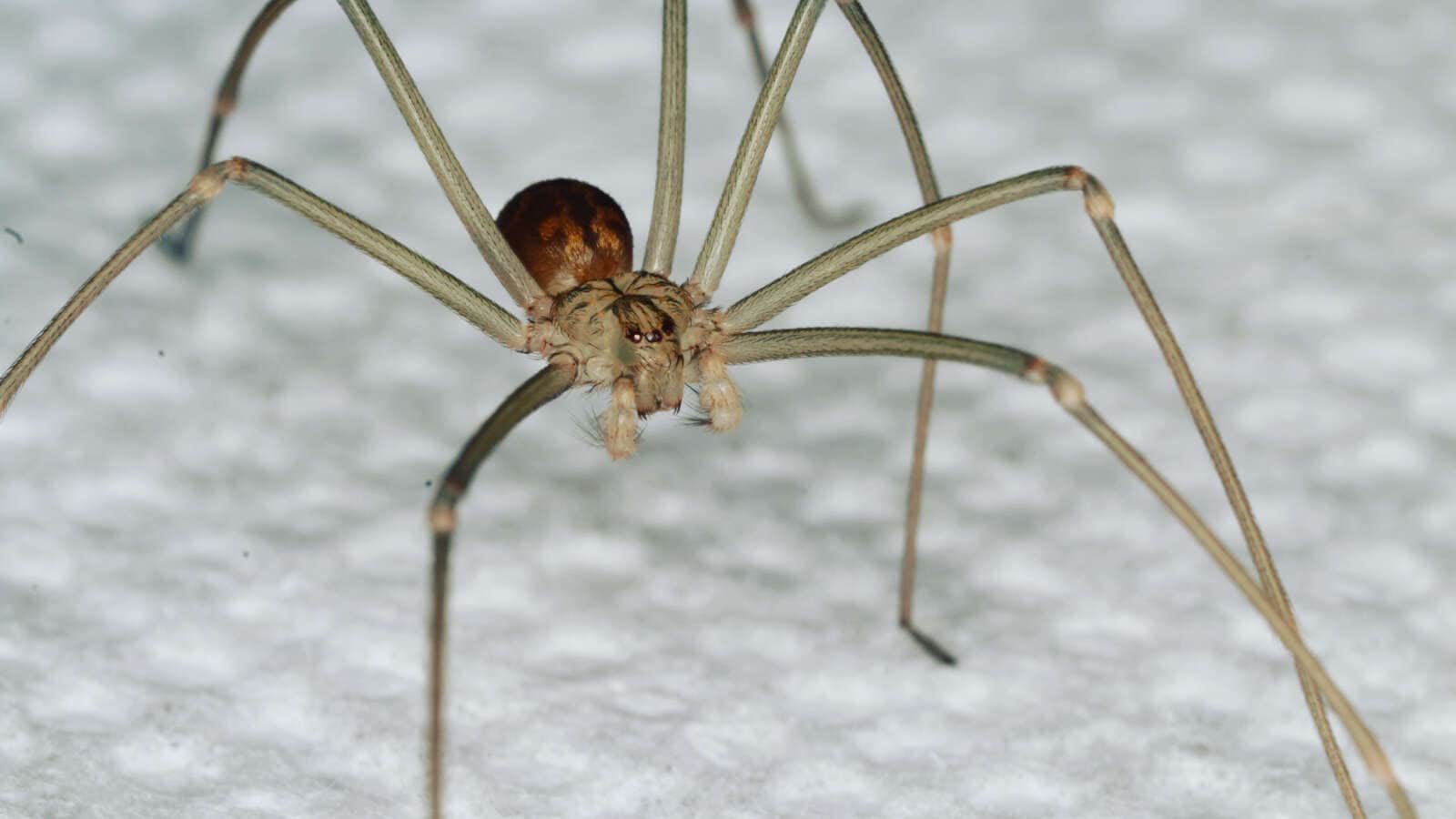
Cellar spiders in particular are common in older St. Louis area basements, recognizable by their long, thin legs and the loose, irregular web they build rather than the neat, symmetrical pattern most people picture. They are harmless to people and actually help control other insect populations, which is worth keeping in mind before assuming every web spotted in a basement corner needs to be removed immediately.
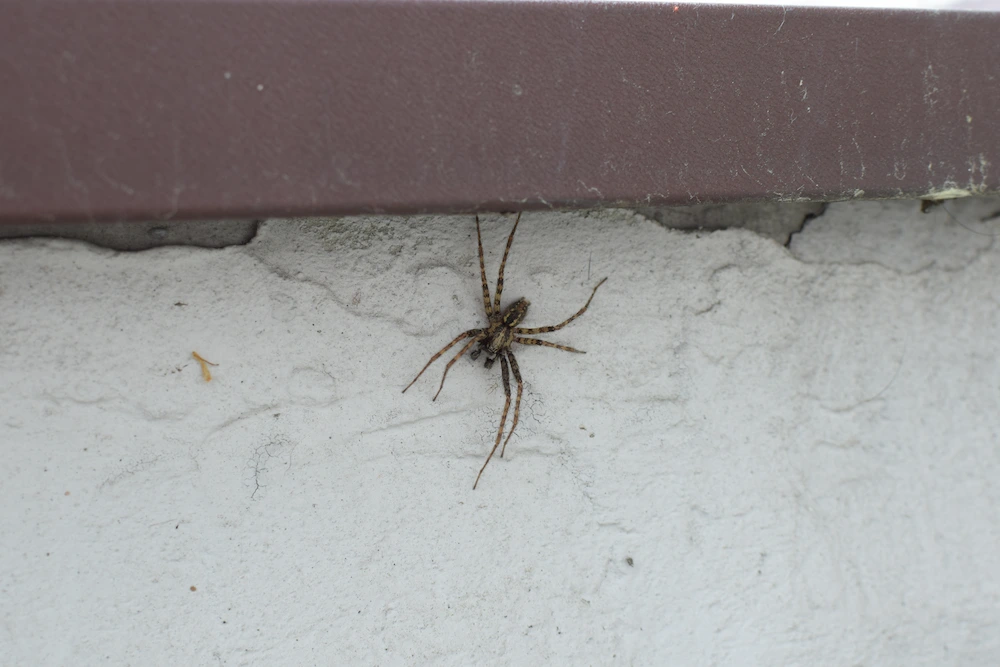
Wolf spiders and jumping spiders take a completely different approach. Instead of building a web and waiting, they actively hunt, which means they can turn up almost anywhere a house has insects for them to chase, including garages, basements, and even bathrooms. Because they do not leave webbing behind, hunting spiders are often the more startling type to encounter, since they tend to show up suddenly rather than being spotted first in a stationary web.
Wolf spiders are also notable for carrying their egg sac attached to their abdomen, and newly hatched spiderlings will ride on the mother’s back for a period after hatching. Encountering one indoors can look alarming for this reason, though the species is not aggressive toward people and prefers to retreat rather than confront when given the chance.
Signs a Web Building Spider Has Moved In
- Fine, sticky webbing in corners near the ceiling.
- Small egg sacs tucked into web strands.
- Webbing behind furniture that rarely gets moved.
- Webs stretched across undisturbed storage boxes.
Checking these spots with a flashlight during a routine basement visit, rather than only when something looks obviously out of place, tends to catch a growing web building population well before it becomes noticeable from across the room.
Where Both Types Prefer to Hide
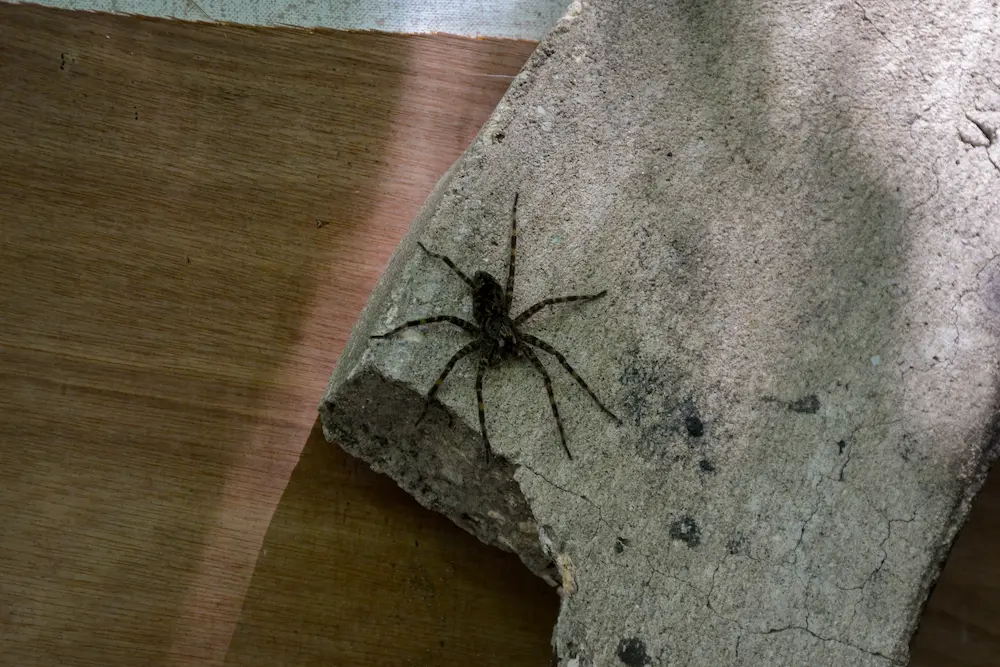
Regardless of hunting style, most spiders share a preference for the same conditions: dark, quiet, and rarely disturbed. That makes basements, closets, garages, and the space behind large furniture the most common hideouts in almost any home across St. Louis and O’Fallon.
Spiders that hunt tend to hide in these same spots during the day and become active at night, which is part of why homeowners often see them scurry across a floor after dark rather than during typical daytime hours. Both web building and hunting spiders are drawn to areas with higher humidity, since that is where the insects they feed on tend to gather, which is why a damp basement or a crawl space with poor drainage often supports a much larger insect and spider population than a drier one.
Older homes throughout the St. Louis area, particularly those with a full basement and original foundation, tend to have more of these conditions than newer construction. Original foundations often have small settling cracks that let both moisture and insects in over decades, building up exactly the kind of environment spiders are drawn to over time and rarely improving without some kind of direct intervention.
Reducing Spider Activity Around the House
Sealing gaps around windows and doors, reducing outdoor lighting near entry points, and keeping storage areas tidy all limit how easily spiders find their way inside and how comfortable they are once they do. Vacuuming corners and behind furniture regularly also disrupts webs before they become established.
Outdoor lighting deserves specific attention, since porch lights and other exterior fixtures attract the flying insects spiders feed on. Switching to yellow-toned bug lights, or simply repositioning fixtures away from direct entry points like doors and windows, reduces how many insects gather right where spiders are most likely to build a web.
Addressing moisture issues, from fixing a leaky pipe to improving crawl space ventilation, removes part of the food supply that keeps a spider population growing indoors. Pointe Pest Control’s spider control services can also help identify which species are present and where they are concentrated, which matters if black widows or brown recluses are a concern.
When to Call In Help
A spider or two is rarely a reason for concern, but a population that keeps returning to the same room, or one concentrated in a basement or crawl space, usually points to a food source that is also worth addressing. Left alone, that combination tends to grow rather than resolve on its own.
Removing spiders without addressing the insects they are feeding on tends to be a short lived fix, since new spiders move in to take advantage of the same conditions soon after. Addressing both at once is what actually breaks the cycle rather than just resetting it every few weeks.
If spider activity in your home has become more than an occasional sighting, Pointe Pest Control’s St. Louis pest control team can help identify what is drawing them in and get the population back under control.
Pointe Knows Where and How Spiders Hide in Homes
Knowing whether a home has more of a web building problem or a hunting spider problem also helps set expectations, since the two respond a little differently to prevention efforts. A web building population tends to drop off quickly once webs are cleared and food sources reduced, while hunting spiders may take a bit longer to notice a change since they were never relying on a fixed web location in the first place. Either way, patience over a few weeks is usually more effective than expecting an immediate, total absence of spiders after a single round of prevention steps, especially in a home where the population took more than one season to build up in the first place.
Contact us for a free quote on our reliable spider control services today!
Citations
The difference between web and hunting spiders. (n.d.). Truly Nolen Pest Control – Canada. Retrieved September 21, 2026, from https://www.trulynolen.ca/the-difference-between-web-and-hunting-spiders/