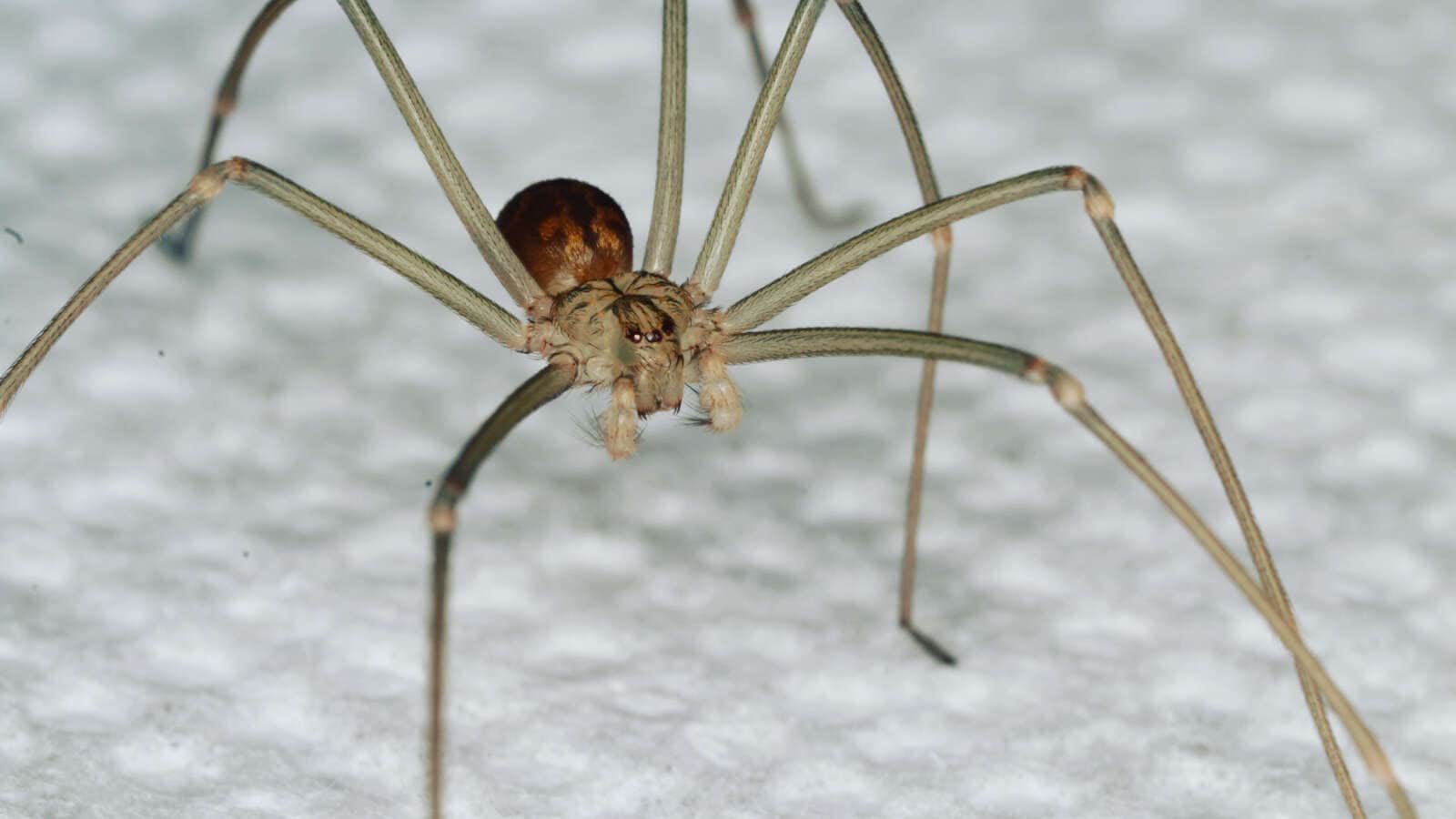

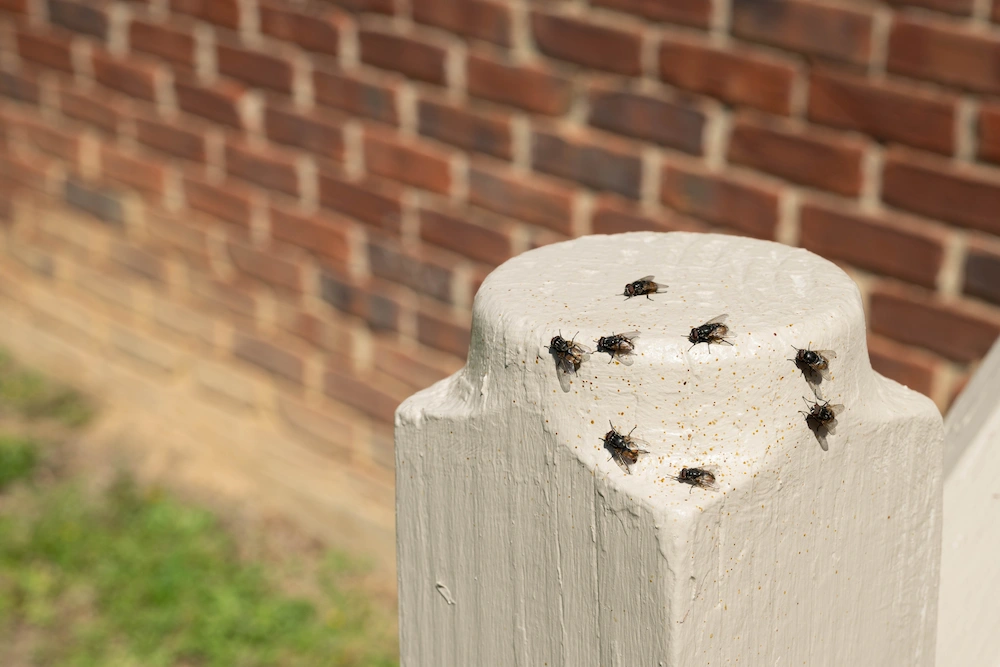
Summary: Cluster flies slip into wall voids and attics in late summer, then reappear at sunny windows all winter. This guide explains how to seal gaps, fix screens and vents, and handle the flies already inside St. Louis area homes.
__________________________________________________________________________________________________________________________________
A few slow, clumsy flies bumping against an upstairs window in October are easy to shrug off. Then they turn up again on a mild afternoon in January, and again in March, sometimes by the dozen. Those are cluster flies, and the ones you see indoors have usually been tucked inside a wall void or attic for weeks.
Knowing how to prevent cluster flies mostly comes down to timing and a few hours of careful sealing. This guide covers why they pick certain houses, which gaps they use, how to tighten up screens and vents, and what to do about the flies already inside.
Why Cluster Flies Pick Certain Houses
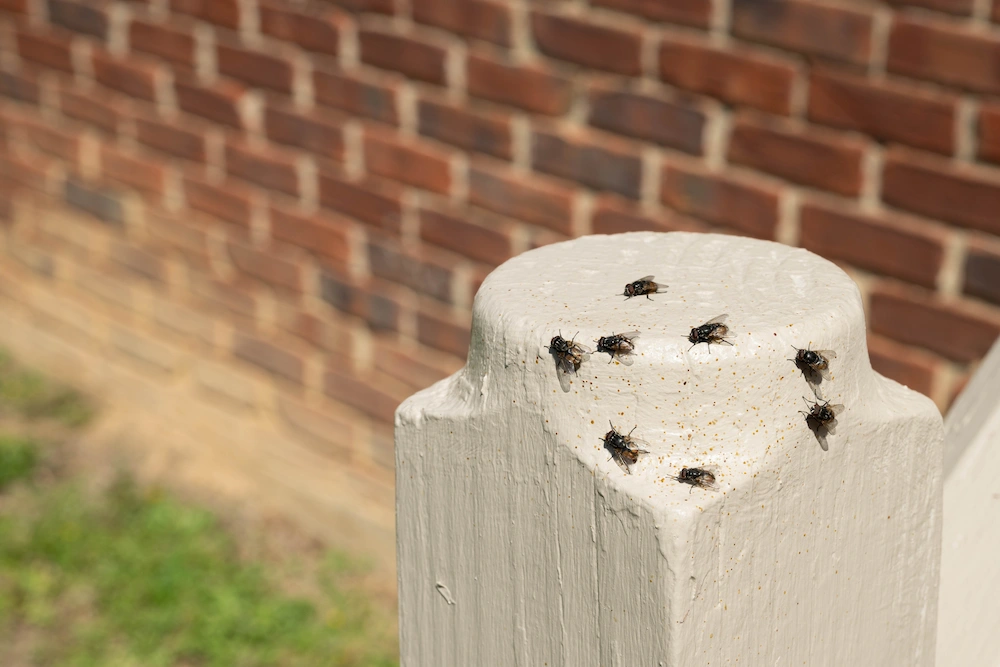
At first glance a cluster fly looks like a house fly, but it is a little larger, moves more sluggishly, and has short golden hairs on its thorax. At rest, its wings fold flat and overlap over the back. These flies are not drawn to garbage or food, and they don’t breed indoors, so you won’t find maggots in the kitchen even when the windowsills are full of adults.
Their life cycle plays out in the soil. Females lay eggs in the ground, and the larvae develop as parasites inside earthworms. That is why homes surrounded by big lawns, pastures, or farm fields tend to see more of them, a description that fits plenty of properties around Waterloo, Millstadt, and Edwardsville.
As nights cool in late summer and early fall, the adults go looking for a protected place to spend the winter. They gather on warm, sunny walls, usually the south and west sides, and crawl into any crack they can find. Once inside the walls or attic they stay mostly dormant until a warm spell wakes them up. Around St. Louis, where winter swings between hard freezes and surprisingly mild days, that can happen several times in one season.
Not every house on a street gets them equally. A two-story home with a sunny, unshaded south wall and open lawn out back is a far more tempting target than a shaded house surrounded by pavement. That difference explains why one neighbor battles cluster flies every winter while the house next door barely sees any.
Cluster flies don’t bite, and they aren’t a food contamination concern the way filth flies are. Large numbers can still leave spots on glass and sills, though, and dead flies piling up in an attic can become food for other pests like larder beetles.
Seal the Exterior Before Late Summer

Sealing is the most useful thing a homeowner can do, but it only pays off if the work is finished before the flies start hunting for shelter. Late July through August is the ideal window. Caulking in October still helps for next year, but it won’t remove the flies already sitting inside the walls.
Start on the sunny sides of the house and work from the top down, since cluster flies tend to gather high on a wall. Look closely at the joints where window and door trim meet siding, gaps along the fascia and soffit, the edges of gable vents, and anywhere cable, phone, or AC lines pass through. Outdoor faucets, dryer vents, and exterior light fixtures often leave small openings as well.
Picking the Right Material
Exterior-grade silicone or polyurethane caulk works well for narrow cracks. Wider gaps hold up better with backer rod or copper mesh packed in first and caulk applied over the top. Loose trim boards and damaged siding pieces should be repaired, because caulk alone won’t bridge a big opening for long.
Brick homes are common across St. Louis County, and they come with one exception. The weep holes along the bottom of a brick wall should never be caulked shut, since they let trapped moisture drain out. Small mesh weep vents made for that purpose keep insects out without blocking the drainage.
Older homes around Clayton and Brentwood often have wood trim that has shrunk and pulled away from the siding or brick over the decades, leaving thin gaps that are hard to spot from the ground. Running a flashlight along the trim at a low angle makes those shadow lines stand out.
Don’t Skip the Roofline
Because cluster flies favor upper floors and attics, gaps near the roof deserve extra attention. Check where the roof meets dormer walls, around chimney flashing, and along ridge and soffit vents. If reaching those spots means a tall ladder, it’s a job worth handing to someone with the right equipment.
Tighten Up Screens and Vents
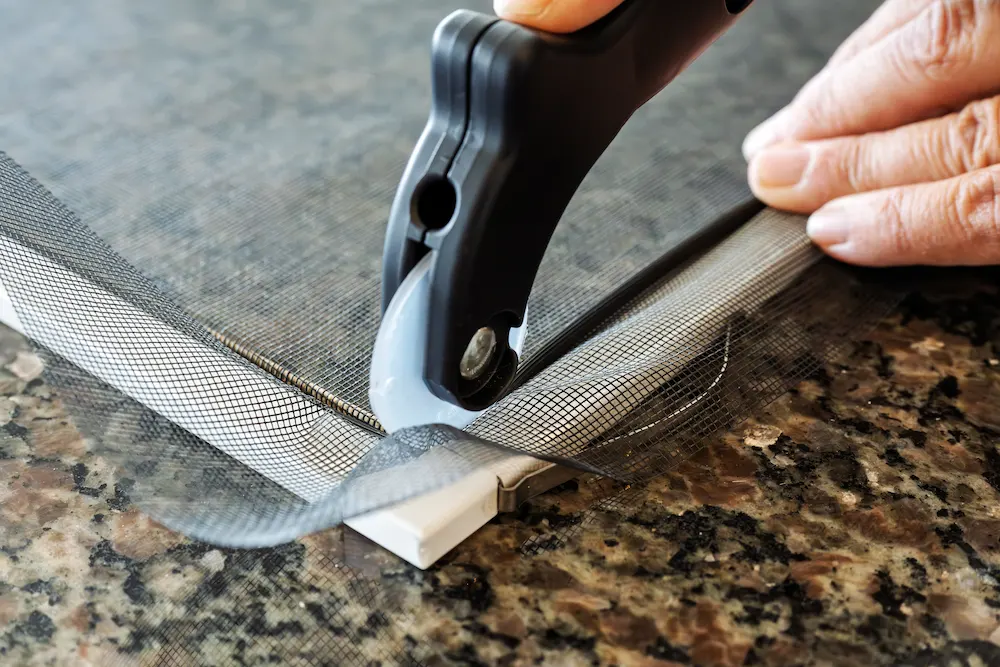
Standard window screen mesh is fine enough to stop a cluster fly, so the problem is usually a screen’s condition and fit. Small tears, bent frames that pull away from the track, and screens left off rarely used windows all give flies a route to the gap around the sash.
Window air conditioners are another weak spot. The accordion side panels often crack or pull loose after a summer in the sun, which leaves an opening on exactly the upper-floor windows these flies like. Pulling the unit before fall, or sealing around it with foam weatherstripping, closes that route.
A quick screen and vent check before the end of summer:
- Patch or replace torn window and door screens
- Make sure every screen frame sits snug in its track
- Add fine mesh behind gable, soffit, and attic vents with damaged screening
- Confirm bathroom and dryer vent flaps close all the way
- Seal around window AC units or remove them for the season
For homes that deal with cluster flies every year, an exterior treatment on the sunny walls, timed for late summer, can help reduce how many make it into the structure. Pointe’s residential pest control services begin with an inspection that looks for entry points, and exclusion work like filling small holes is part of the long-term approach.
If They’re Already Inside
Flies that wintered in the walls usually reach living space through gaps around window trim, ceiling light fixtures, outlets, and attic hatches. Caulking interior trim gaps and adding weatherstripping to the attic access can cut down on how many wander into rooms.
For the ones that get through, a vacuum with a hose attachment is the cleanest fix, followed by emptying the canister or bag outdoors. Swatting them against a window tends to leave a smear. Spraying insecticide into wall voids yourself is also a poor idea, because it leaves dead flies inside the wall where beetles can feed on them.
Getting Ahead of Next Year’s Flies in St. Charles
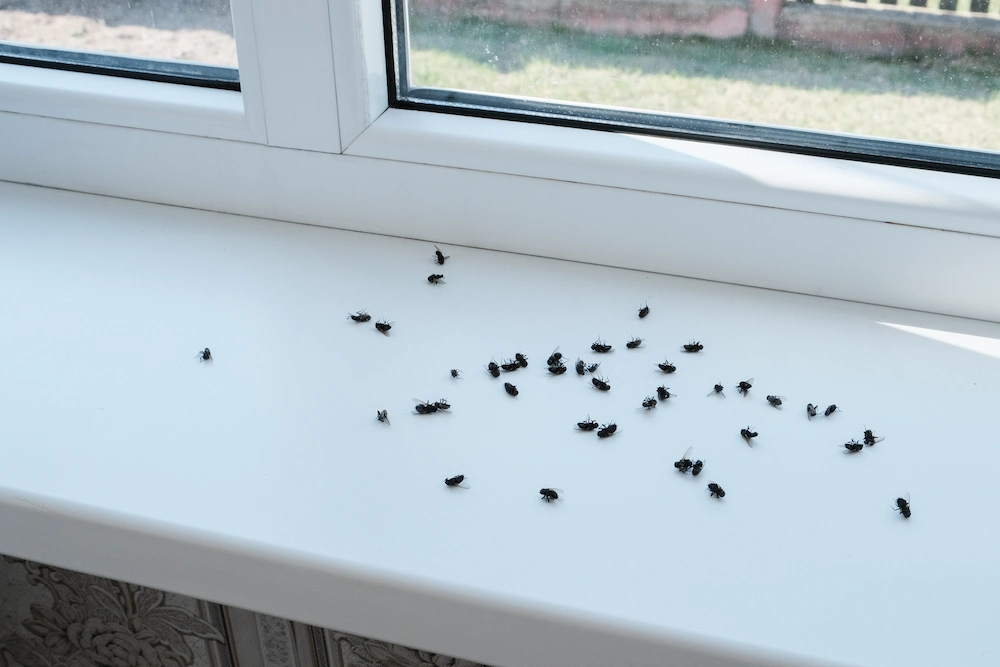
Cluster flies keep returning to homes that keep offering them a way in. The short version of how to prevent cluster flies: seal the sunny sides by late summer, fix screens and vents, give the roofline a careful look, and vacuum up stragglers instead of treating walls on your own. Together, those steps can make next winter’s windowsills a lot quieter.
If the same fly problem shows up every winter, the St. Charles pest control team at Pointe can walk the exterior with you, find where the flies are slipping in, and suggest a plan that fits your house. Reaching out this fall leaves plenty of time to get ahead of next August. So, contact us for a free quote on our efficient pest control services today!
Citations
Cluster fly. (n.d.). Michigan State University: Plant & Pest Diagnostics. Retrieved October 8, 2026, from https://www.canr.msu.edu/resources/cluster-fly