
Summary: Rodents move into wall voids because they offer protection from predators, steady warmth, insulation for nesting, and hidden routes through the house. This guide explains why do rodents like living in walls, how mice and rats get into walls in St. Louis area homes, the signs to watch for, and how to get them out for good.
__________________________________________________________________________________________________________________________________
It usually starts after dark. You’re in bed or watching TV, and a faint scratching runs along the wall behind you, stops, then starts again a few feet over. By morning it’s silent. Around St. Louis, that sound picks up every year as November nights turn cold.
Rodents in walls aren’t there by accident. A wall void gives a mouse or rat nearly everything it needs in one hidden space, and once they settle in, they rarely leave on their own. This article explains why walls are so attractive to rodents, how they get in, the signs that point to them, and what actually gets them out.
What a Wall Void Offers a Mouse or Rat
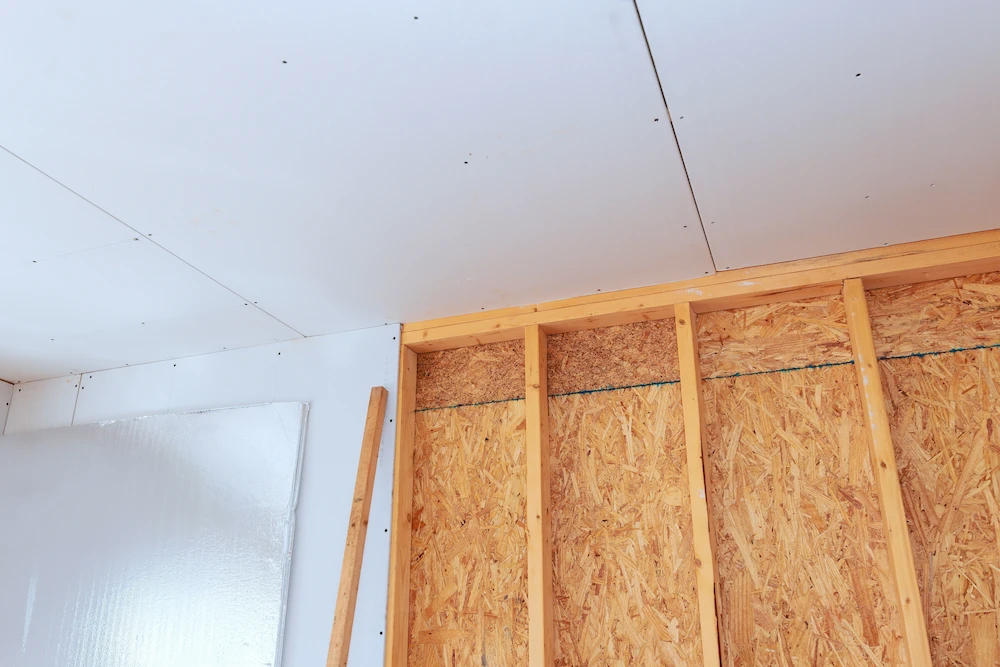
To a rodent, the space between your drywall and the exterior siding or brick is ideal real estate. It is dark, protected, close to food, and almost never disturbed. Each of those features matters more than it might seem.
Protection From Predators and People
Mice and rats are prey animals. Outdoors, they are hunted by hawks, owls, snakes, foxes, and neighborhood cats, so their instinct is to stay in tight, enclosed spaces where nothing larger can follow. A wall cavity is about as safe as it gets. Nothing bigger than a rodent fits through the gaps they use, and the walls block both light and noise.
People are the other threat, and walls keep them out of the picture too. Rodents prefer to stay hidden and will generally avoid contact, but they can bite when cornered. Living inside the wall means they can move around the house without ever crossing open floor where someone might see them.
Warmth That Holds Steady All Winter
St. Louis winters swing between hard freezes and mild afternoons, and a mouse living outside has to ride out every one of those swings. Inside a wall, the temperature stays far more stable, especially on walls that share space with a furnace, a water heater, or warm-air ducts. Rats and mice love cozy shelters, which is a big part of why they become common house pests once it gets cold.
That steady warmth also lets them keep breeding after it turns cold. Rodents reproduce several times a year, and a protected nest inside a heated house gives each new litter a far better start than a burrow in frozen ground.
Building Material Already in Place
Most exterior walls are packed with insulation, and that insulation is perfect nesting material. Rodents shred insulation, paper, and fabric with their teeth to build soft nests, so a wall void comes pre-stocked. A mouse doesn’t have to drag nesting material in from outside when it can pull apart the fiberglass or cellulose right where it plans to sleep.
The damage adds up over time. Shredded and compacted insulation doesn’t do its job as well, and the holes rodents chew can let cold air into rooms that used to stay comfortable.
How Rodents Get Into Walls in the First Place
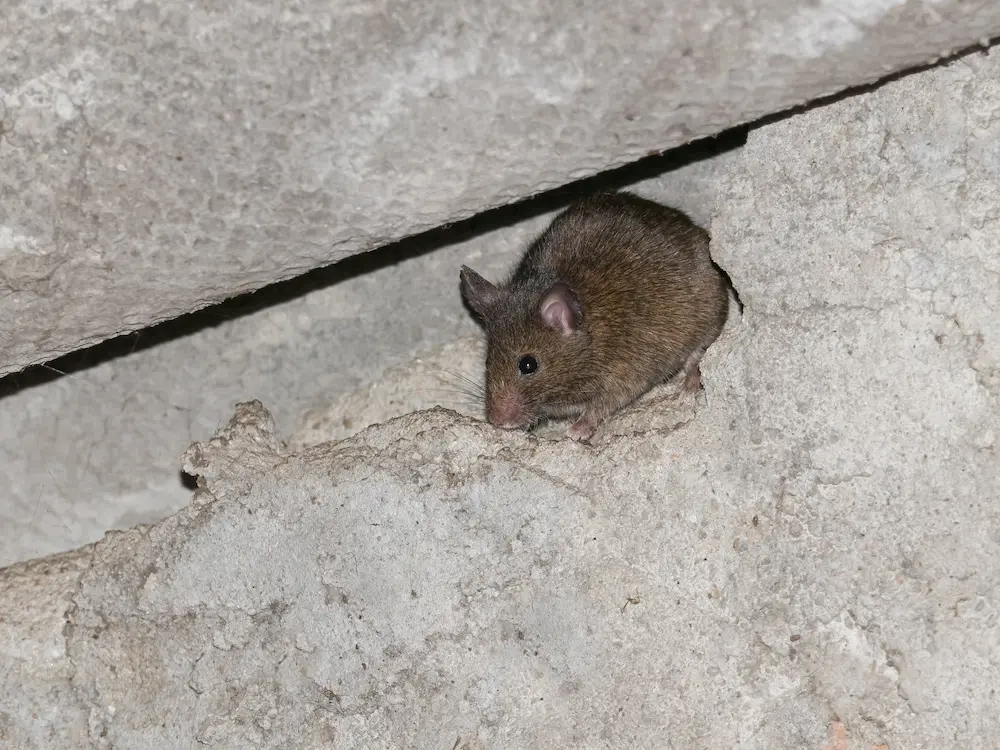
Rodents don’t need much room. House mice can squeeze through holes about the size of a dime, and young rats can fit through openings that look far too small for them. They also need to gnaw constantly because their teeth never stop growing, so a gap that is a little too tight can be chewed wider.
Common Entry Points Around St. Louis Homes
Most rodents enter at or near ground level and then work their way into the walls. The usual entry points include:
- Gaps where water lines, gas lines, cable, and AC lines pass through the foundation or siding
- Openings around dryer vents and exhaust vents with damaged flaps
- Worn garage door seals and missing door sweeps
- Cracks in the foundation and gaps along the sill plate where the house sits on the foundation
- Torn soffit or attic vent screens, often reached by climbing nearby shrubs or downspouts
Brick homes are common across St. Louis County and the Metro East, and they have their own weak spots. Mortar joints crack over time, and the spots where utility lines were added years after the house was built are often left with small gaps around them.
Highways Inside the Walls
Once a mouse is inside one wall, it can often reach the rest of the house. Plumbing chases, the gaps around pipes under sinks, and the open spaces around ductwork connect the basement to upper floors. Mice are good climbers, so a vertical run of wall is no obstacle.
Older homes in places like Clayton, Brentwood, and Belleville sometimes have framing with open channels running from the basement up toward the attic. That layout lets a rodent that slipped in near the foundation travel much farther than you’d expect, which is why scratching can show up on the second floor even when the entry point is down by the basement.
Signs You Have Rodents in Your Walls
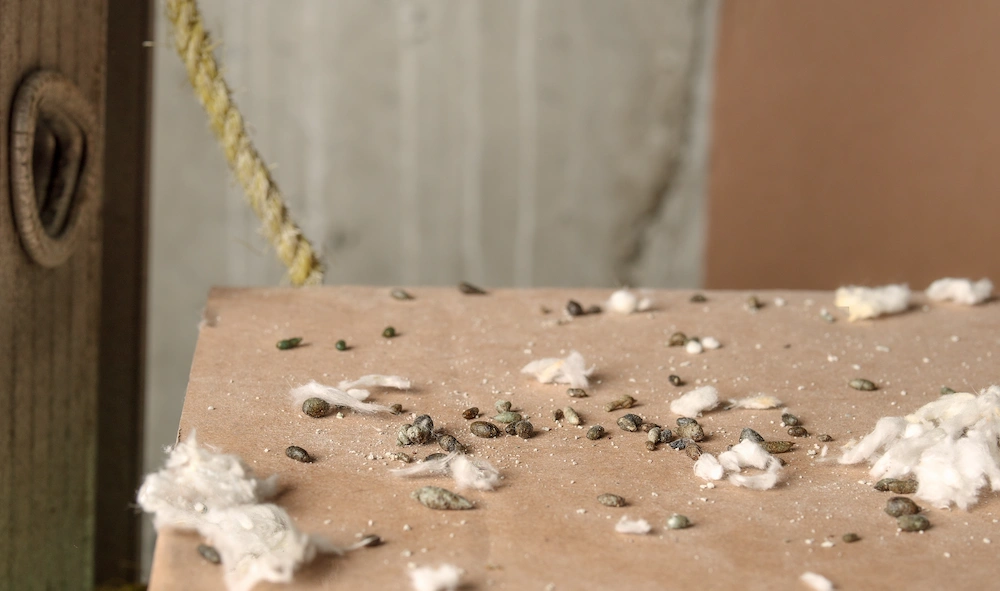
Hearing something is often the first clue, but sound alone can be misleading. Combine it with the physical signs below before deciding what you’re dealing with.
Sounds and Timing
Mice and rats are most active at night, so scratching, scurrying, and faint squeaking tend to come in the evening and early morning hours. The sound usually moves along a wall or up and down inside it. Gnawing has its own rhythm, a steady scraping that stops and starts.
Heavier thumping or rolling sounds in the attic during daylight hours may point to something bigger, like squirrels. That distinction matters, because Pointe Pest Control treats rats and mice but does not service squirrels, raccoons, or other wildlife larger than a rat. Animals that size call for a wildlife specialist.
What to Look for Around the House
Physical evidence tends to collect near the spots where rodents leave the walls to find food. Start by looking under the kitchen sink, behind the stove and refrigerator, and along baseboards for small dark droppings. Mice and rats leave droppings constantly as they move, so fresh ones near a wall gap are a strong sign of current activity. Shredded paper, fabric, or bits of insulation in cabinets or along the floor point to nesting nearby.
Gnaw marks on baseboards, cabinet corners, and food packaging are another giveaway. You may also notice greasy rub marks along the bottom of walls where rodents travel the same route over and over, along with a musty smell that grows stronger near the nest. Pets sometimes notice before people do. A dog or cat staring at a blank wall or pawing at one spot is worth paying attention to.
Why It Shouldn’t Wait
Rodents in walls cause problems beyond the noise. Their constant gnawing can reach electrical wiring, and chewed wiring can create a fire hazard. They contaminate whatever they touch with droppings and urine, and they are known carriers of diseases such as hantavirus, salmonellosis, and rat-bite fever. If anyone in the home starts feeling sick during a rodent problem, contact a doctor.
There is also the math of it. If you’ve seen one mouse, there are almost always others nearby, and young rodents grow up fast. A couple of mice in October can become a much bigger group by spring.
Getting Rodents Out of Walls for Good
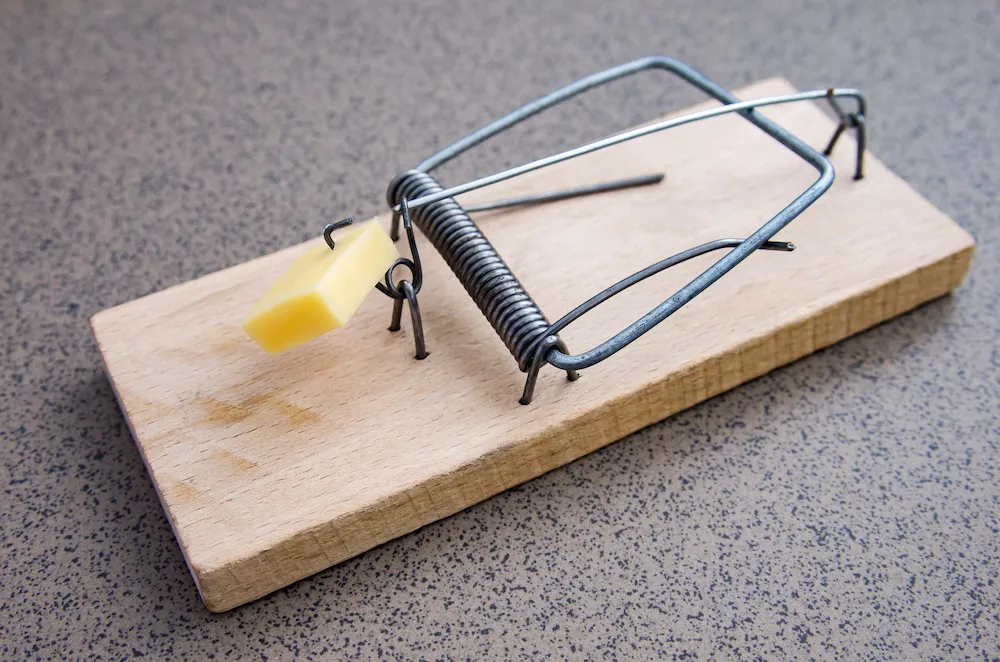
The hardest part about rodents in walls is that you can’t see them. That makes the order of operations important. Sealing every hole first can trap mice inside, and putting out bait without a plan can leave you with an odor problem when a rodent dies somewhere you can’t reach.
What Usually Goes Wrong With DIY
Hardware store traps and baits may catch a mouse or two, but they rarely solve the infestation. Traps placed in the middle of the floor miss the routes rodents actually travel, which hug the walls. Loose bait tucked into a wall cavity is an even worse idea, since a rodent that dies inside the wall can leave a smell that lingers for weeks.
Spray foam on its own is another common mistake. Rodents can chew through soft foam, so gaps should be packed with steel wool or copper mesh and then sealed over. Larger openings may need hardware cloth or sheet metal.
What a Professional Approach Looks Like
Pointe’s rodent control starts with a detailed inspection for droppings, gnaw marks, nesting material, and the entry points that let rodents get inside. From there, technicians use a combination of baiting and trapping based on how severe the activity is and how the rodents are behaving. Placement is precise and monitored, which keeps treatments where rodents travel and away from where your family and pets spend time.
Their approach follows Integrated Pest Management, which means inspection, exclusion, trapping, and monitoring work together instead of relying on one method. Sealing minor entry points is part of that work, so the rodents that are removed aren’t replaced by the next group looking for a warm wall. You can read more about how that service works on our rodent control page.
Quieting the Walls in St. Louis Homes This Winter
Rodents like living in walls because walls give them safety from predators, steady warmth, ready-made nesting material, and hidden routes to your kitchen. Sealing the outside of the house, keeping food stored tightly, and acting at the first sign of scratching or droppings can keep a few mice from turning into a full infestation.
If the scratching has already started, Pointe’s St. Louis rodent control team can track down where the rodents are living, how they’re getting in, and what it will take to close those routes. Homeowners in St. Louis, St. Charles, Chesterfield, and Florissant, along with Belleville and Collinsville on the Illinois side, can call for a free quote before the cold really sets in. Contact us for more information today!
Citations
How to get rid of mice in walls & crawlspaces. (n.d.). Orkin. Retrieved November 9, 2026, from https://www.orkin.com/pests/rodents/mouse-control/how-to-get-rid-of-mice-in-walls-and-crawlspaces